Beef Tips and Gravy
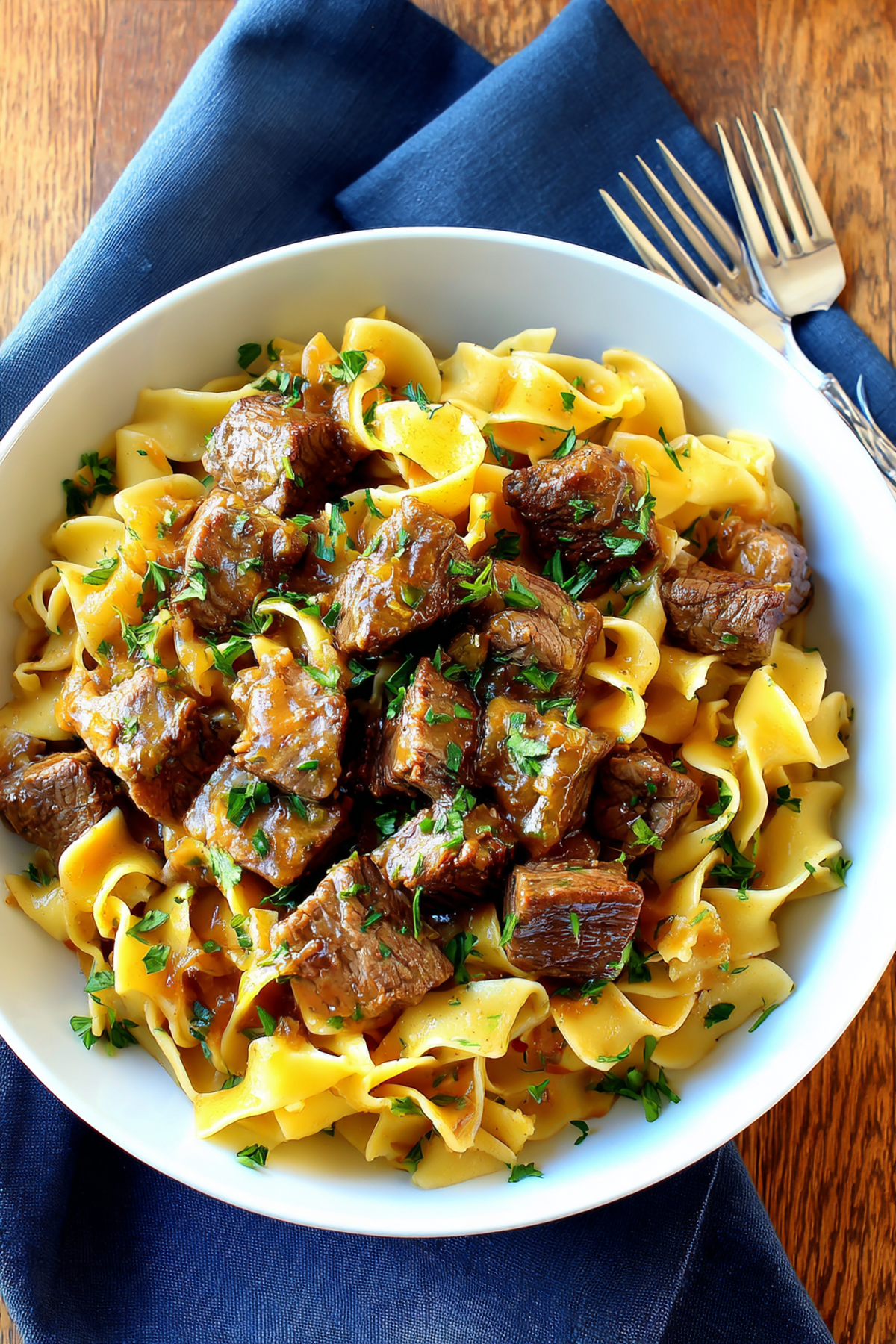
I make these beef tips and gravy with chunks of beef chuck roast simmered with onion, beef broth, and condensed onion soup. The beef cooks slowly until fork-tender, while the cooking liquid forms the base for the gravy. We like this over wide egg noodles, but mashed potatoes are also a classic.
| Servings | Prep Time | Cook Time | Calories | Protein |
|---|---|---|---|---|
| 4 | 20 minutes | 1 hour 45 minutes | 508 kcal | 44 g |
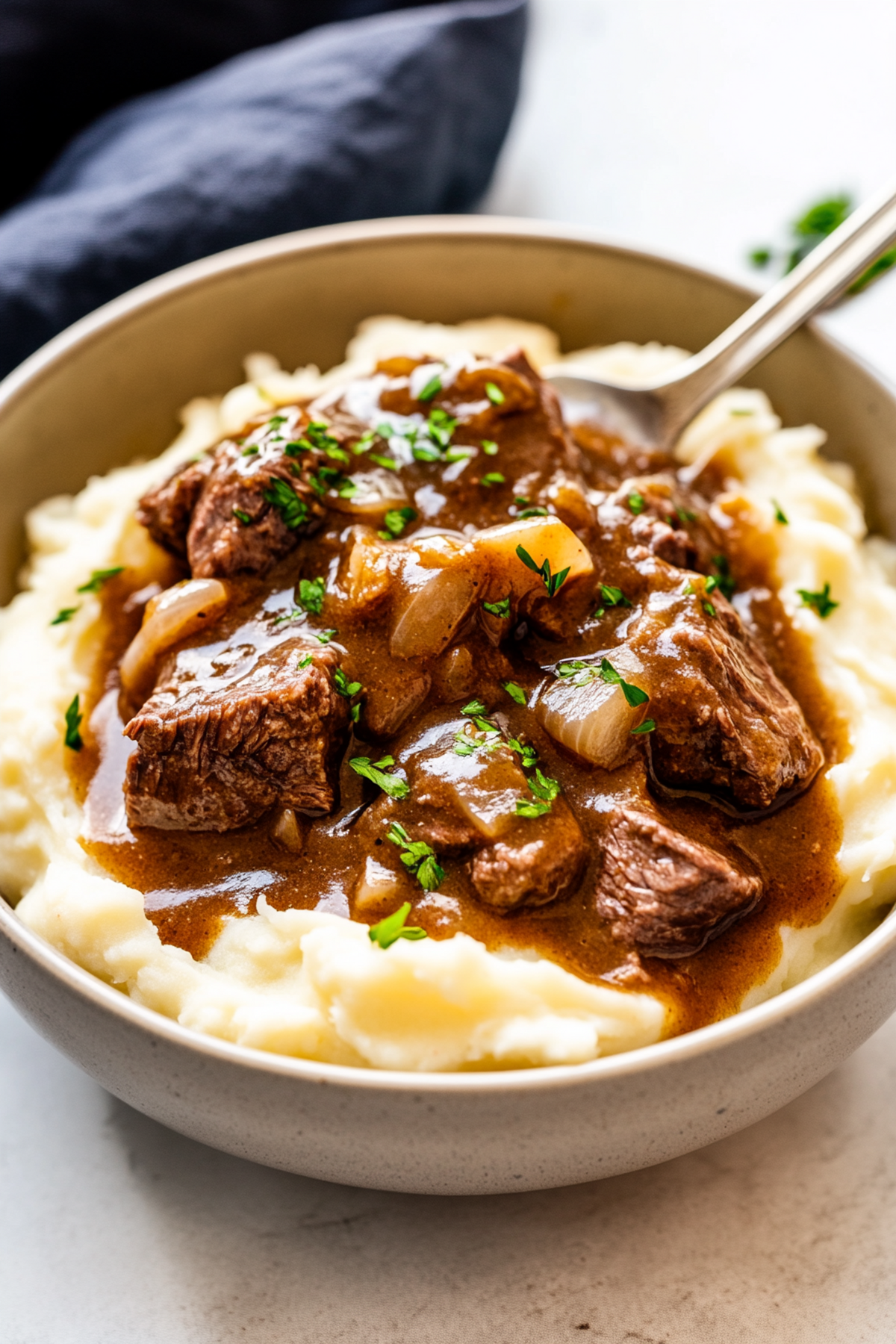
Table of contents
Key Takeaways
- Beef tips and gravy utilizes chuck roast, which becomes tender due to its collagen and fat content during a slow simmer.
- The recipe requires minimal ingredients like beef broth and condensed onion soup to create a flavorful gravy.
- Browning the beef first enhances its flavor and the resulting gravy, while a cornstarch slurry thickens the sauce after cooking.
- Serve beef tips over wide egg noodles or mashed potatoes, accompanied by vegetables for a complete meal.
- Store leftovers in the refrigerator for up to four days, reheating gently to maintain tenderness.
What You’ll Like About This Recipe
► This recipe turns chuck roast into tender beef tips without requiring a long list of ingredients. Beef broth, condensed onion soup, Worcestershire sauce, and a bay leaf create a savory gravy while the beef cooks.
► Most of the cooking time is hands-off. Once the beef and gravy ingredients reach a simmer, cover the pot and let the chuck roast cook slowly until a fork slides into it easily.
► You thicken the gravy at the end, after the beef is tender. This gives you more control over the consistency and prevents the gravy from becoming too thick during the long simmer.
Why Chuck Roast Works for Beef Tips
Chuck roast comes from the shoulder of the animal. That part is a well-used muscle with collagen rich connective tissue and some marbled fat. It works because during the slow simmer, it’s the connective tissue that keeps the meat tender and moist. The fat adds more moisture and beef flavor to the gravy. The result is fork-tender beef that stays moist during the full cooking time.
Round roast or sirloin roast works, but chuck roast works better here. Round and sirloin cuts are from the back end of the cow and are tougher and have a lower fat content. Less marbling also means they stay firmer even after the longer cooking time.
Stew meat is my least favorite because it often comes from a mix of cuts. This mix can have varying tenderness, moisture and ideal cooking times.
How to Make Beef Tips and Gravy
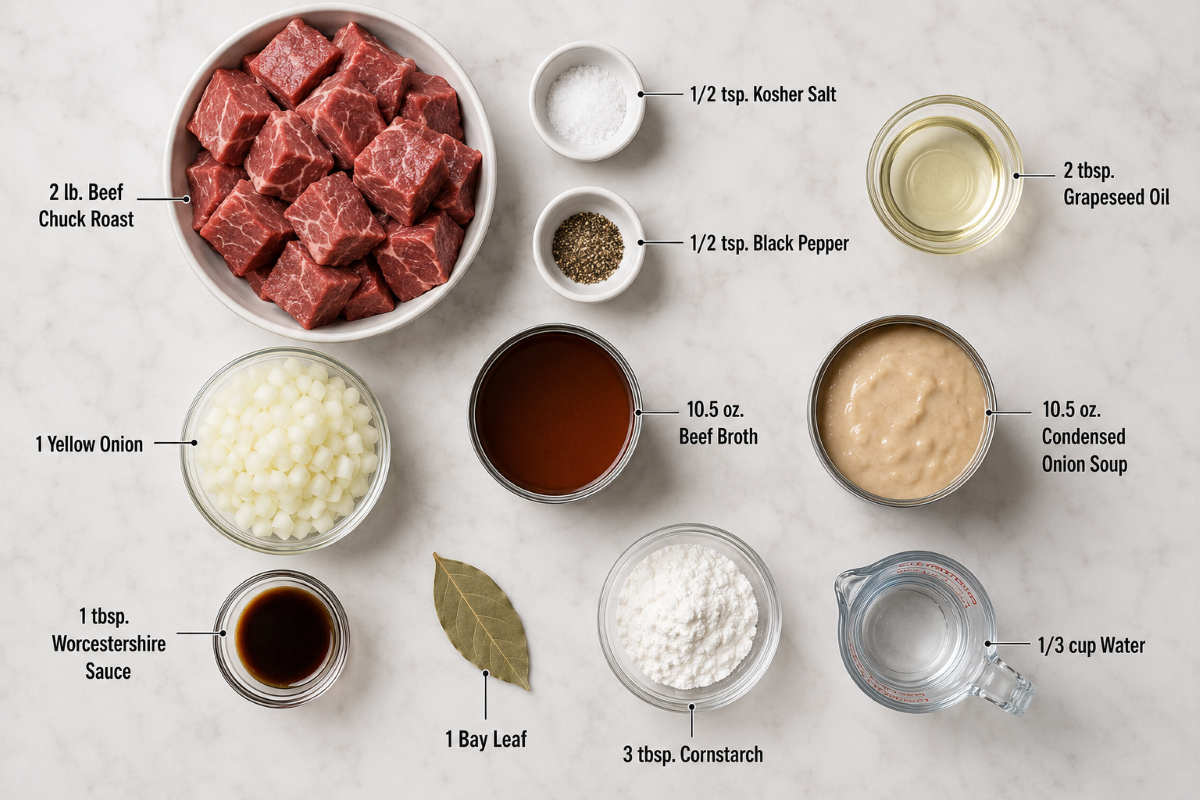
- Trim excess fat from the chuck roast. Cut the roast into evenly sized 1½-inch cubes, then season the pieces with kosher salt and black pepper.
- Heat 1 tablespoon of grapeseed oil in a large skillet or Dutch oven over medium-high heat until it starts to shimmer.
- Brown the beef in small batches. Leave space between the pieces so moisture escapes and the beef develops a brown exterior. Transfer each browned batch to a bowl.
- Reduce the heat to medium and add the remaining oil. Add the chopped onion and cook for 5 to 7 minutes, until softened.
- Return the browned beef and any collected juices to the pot. Add the beef broth, condensed onion soup, Worcestershire sauce and bay leaf.
- Bring the mixture to a boil. Cover the pot and reduce the heat to maintain a gentle simmer. Cook for 1½ to 2 hours, or until the beef is fork-tender.
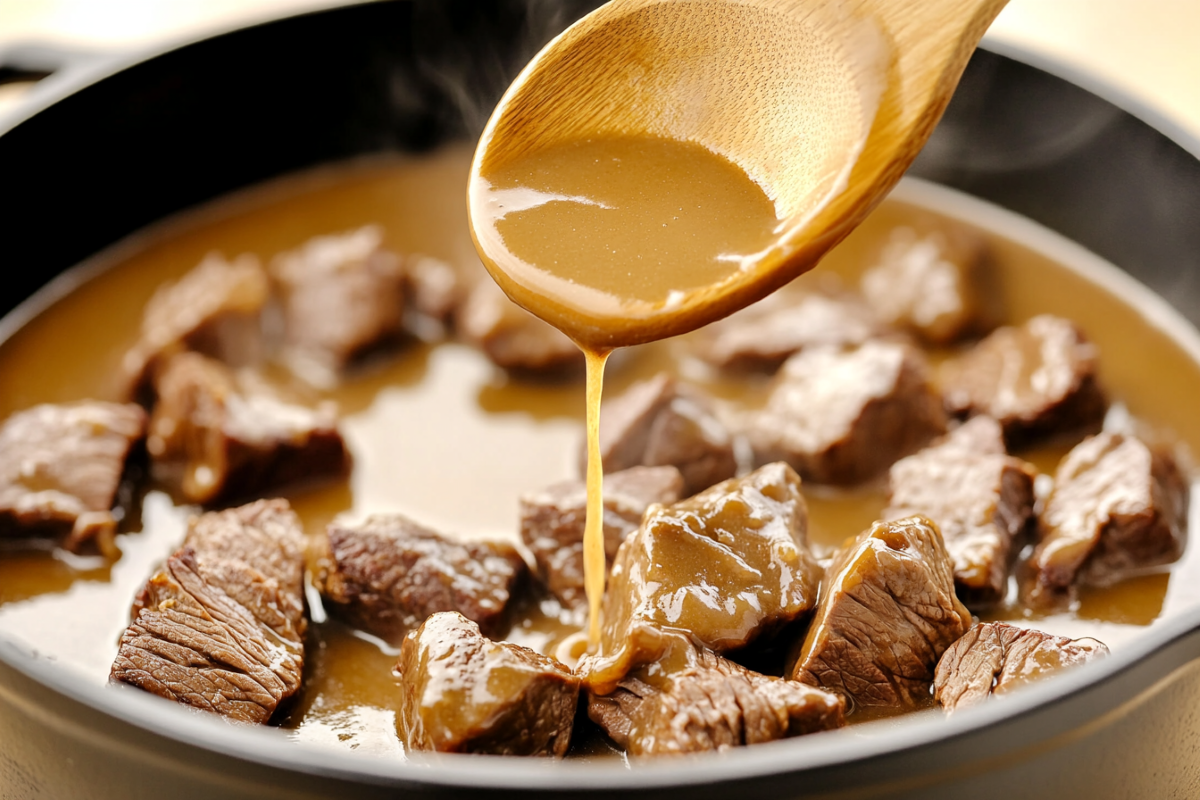
- For the gravy, mix the cornstarch and cold water until smooth. Slowly pour the slurry into the beef mixture while stirring. Add a little at a time and stop when the gravy reaches the thickness you prefer.
- Taste the gravy and add more salt and pepper if needed. Remove and discard the bay leaf. Serve over mashed potatoes or wide egg noodles.
How to Tell When Chuck Roast Is Tender
- Test a piece of beef with a fork after 1½ hours. The fork should slide into the center without much resistance.
- If the beef still feels firm, cover the pot and continue simmering. Check it every 15 minutes until tender.
- A firm chuck roast often needs more time. Turning up the heat will not make it tender sooner. In fact, a hard boil tightens the meat and reduces the gravy too quickly.
Tips for Browning the Beef
- Pat the beef dry if the surface looks wet. Excess moisture prevents browning.
- Heat the oil until it shimmers before adding the first batch. The beef should sizzle when it touches the pot.
- Do not crowd the pieces together. Overcrowded beef releases moisture and steams instead of developing a browned surface.
- Let each piece sit against the hot pot long enough to brown before turning it. Transfer the finished batches to a bowl. Save any juices that collect in the bowl for the gravy.
How to Thicken the Gravy
- Combine the cornstarch with cold water and stir until completely smooth. Cornstarch forms lumps when added directly to hot liquid.
- Pour the slurry into the pot a little at a time while stirring. Let the gravy simmer briefly between additions so you see how much it thickens.
- Stop adding the slurry when the gravy reaches the consistency you want. You might not need the entire amount.
- If you want extra gravy, add a splash of beef broth before adding the cornstarch slurry. Taste the finished gravy and season with salt and pepper to taste.
What to Serve with Beef Tips and Gravy
Wide egg noodles are my first choice for serving with beef tips. Mashed potatoes are also a favorite for many.
Add steamed green beans, broccoli, carrots, or Brussels sprouts for a vegetable.
Storage and Reheating
- Store leftover beef tips and gravy in an airtight container in the refrigerator for up to four days.
- Reheat individual servings in a covered saucepan over low heat. I don’t recommend reheating in the microwave, as it can dry and toughen the meat.
- The gravy will thicken in the refrigerator. Stir in a small amount of beef broth or water during reheating if you want a thinner consistency.
Frequently Asked Questions
Beef tips are bite-size pieces of beef cooked until tender, often in gravy. The name does not always refer to one specific cut. This recipe uses chuck roast because it has enough marbling and connective tissue for the 1½ to 2-hour simmer.
Chuck roast is the best choice for this recipe. The slow, covered simmer softens its connective tissue while the marbled fat adds moisture and beef flavor to the gravy.
Sirloin and tenderloin cook faster and cost more. They are better suited to recipes with shorter cooking times.
Beef tips describe the finished pieces of beef, while stew meat is a package of precut beef sold by the grocery store. Packaged stew meat sometimes contains pieces from different cuts, so the pieces might not become tender at the same time.
Buying a whole chuck roast lets you check the marbling and cut the beef into evenly sized pieces.
Tough chuck roast usually needs more cooking time. Keep the pot covered and continue simmering gently, checking the beef every 15 minutes. The beef is ready when a fork slides into a piece without much resistance.
Do not raise the heat to speed up the process. A hard boil tightens the meat and reduces the gravy before the chuck roast becomes tender.
Cooking time provides a guide, but the texture of the beef gives you the final answer. Insert a fork into one of the larger pieces. The fork should slide in easily, and the beef should separate with light pressure.
If the beef is still firm after 1½ hours, cover the pot and continue simmering. Check it every 15 minutes. Chuck roast varies in thickness, marbling, and connective tissue, so some roasts need closer to 2 hours.
A gentle simmer produces small bubbles that rise slowly around the edges and occasionally break across the surface. The liquid should not roll, splash, or bubble hard.
Adjust the burner as needed to maintain this level of heat. A hard boil reduces the liquid too quickly and tightens the outside of the beef before the connective tissue softens.
No. This recipe uses canned condensed onion soup or canned condensed French onion soup. Dry onion soup mix is a powdered seasoning and has a different concentration of salt and onion flavor.
Do not replace the canned soup with an equal amount of dry soup mix. The canned soup also supplies liquid and body for the gravy.
No. Add the condensed soup directly from the can. The separate can of beef broth supplies the liquid needed to simmer the chuck roast.
Absolutely. Add a splash of beef broth before thickening the cooking liquid. Then add the cornstarch slurry gradually until the gravy reaches the consistency you prefer.
Yes. Let the beef and gravy cool, then transfer them to a freezer-safe container. Thaw the container overnight in the refrigerator and reheat gently on the stovetop. Stir in a small amount of beef broth if the gravy separates or becomes too thick.
Beef Tips and Gravy
Ingredients
- 2 pounds beef chuck roast, cubed cut into 1-1/2 inch evenly-sized pieces
- ½ teaspoon kosher salt
- ½ teaspoon ground black black pepper
- 2 tablespoons grapeseed oil or other neutral oil
- 1 yellow onion, chopped
- 1 (10.5 ounce) can beef broth
- 1 (10.5 ounce) can condensed onion soup or condensed French onion soup
- 1 tablespoon Worcestershire sauce
- 1 bay leaf
- 3 tablespoons cornstarch
- ⅓ cup water

Instructions
- Trim the chuck roast of excess fat. Cut the beef roast into 1-1/2 evenly-sized cubes. Toss the cubes with salt and pepper.
- In a large skillet or Dutch oven over medium-high, heat 1 tablespoon of the oil until shimmering. Working in batches, add the seasoned beef and cook until browned. Transfer the beef to a bowl and set aside.
- Reduce the heat to medium and add the remaining oil. Add the onion and cook, 5 to 7 minutes, or until softened.
- Add the cooked beef cubes, beef broth, condensed onion soup, Worcestershire sauce, and bay leaf to the pot. Bring to a boil, cover, and reduce heat to a simmer. Simmer for 1½ to 2 hours or until beef is fork-tender.
- Combine cornstarch with ⅓ cup cold water. Slowly pour into the beef mixture a little at a time while stirring until it reaches the desired consistency.
- Taste and season with additional salt and pepper, if desired. Discard bay leaf and serve over mashed potatoes or wide egg noodles.
Cooks Tips
- Neutral cooking oils, such as the grapeseed used here, are my preferred choice. They don’t add any unnecessary flavor. But any high-heat cooking oil you have on hand will work.
- The onion soup is canned condensed soup. Do not use packets of dried French onion soup mix.
- Brown the beef in small batches so it sears instead of steaming.
- Let the tips simmer slowly. Chuck roast needs time to become tender. Rushing this step only makes the beef tips tougher.
- Keep the pot covered while simmering so the beef stays moist and the gravy does not reduce too quickly.
- For more gravy, add a splash more beef broth before thickening.
- Store leftovers in an airtight container in the refrigerator for up to 4 days or freeze for up to 3 months.