Caramelized Cabbage with Miso Brown Butter
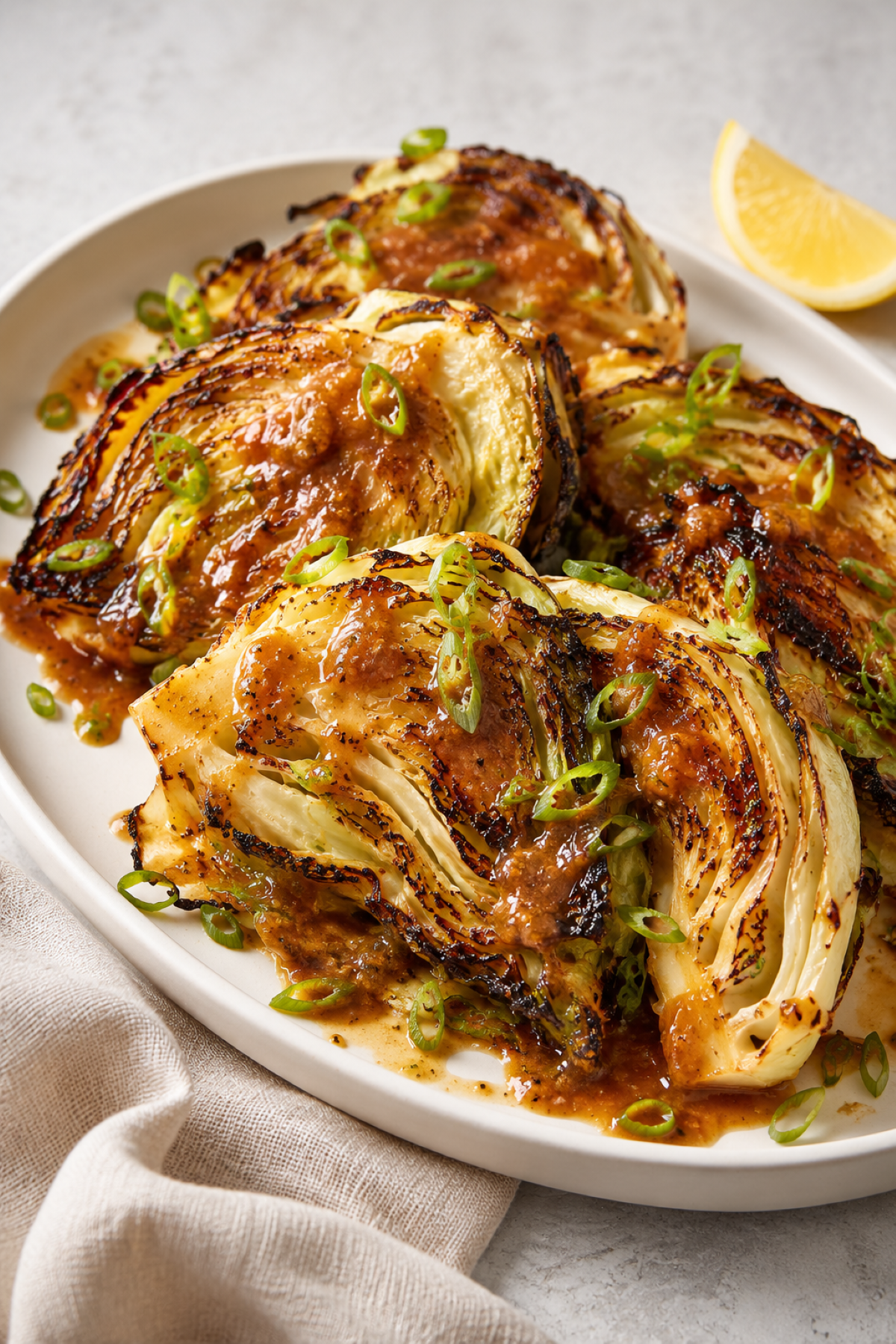
Cabbage browns better than many vegetables, which is one of many reasons I like using it. When cut into wedges and added to a hot skillet, the cut sides brown, the middle softens, and the outer leaves get crispy edges.
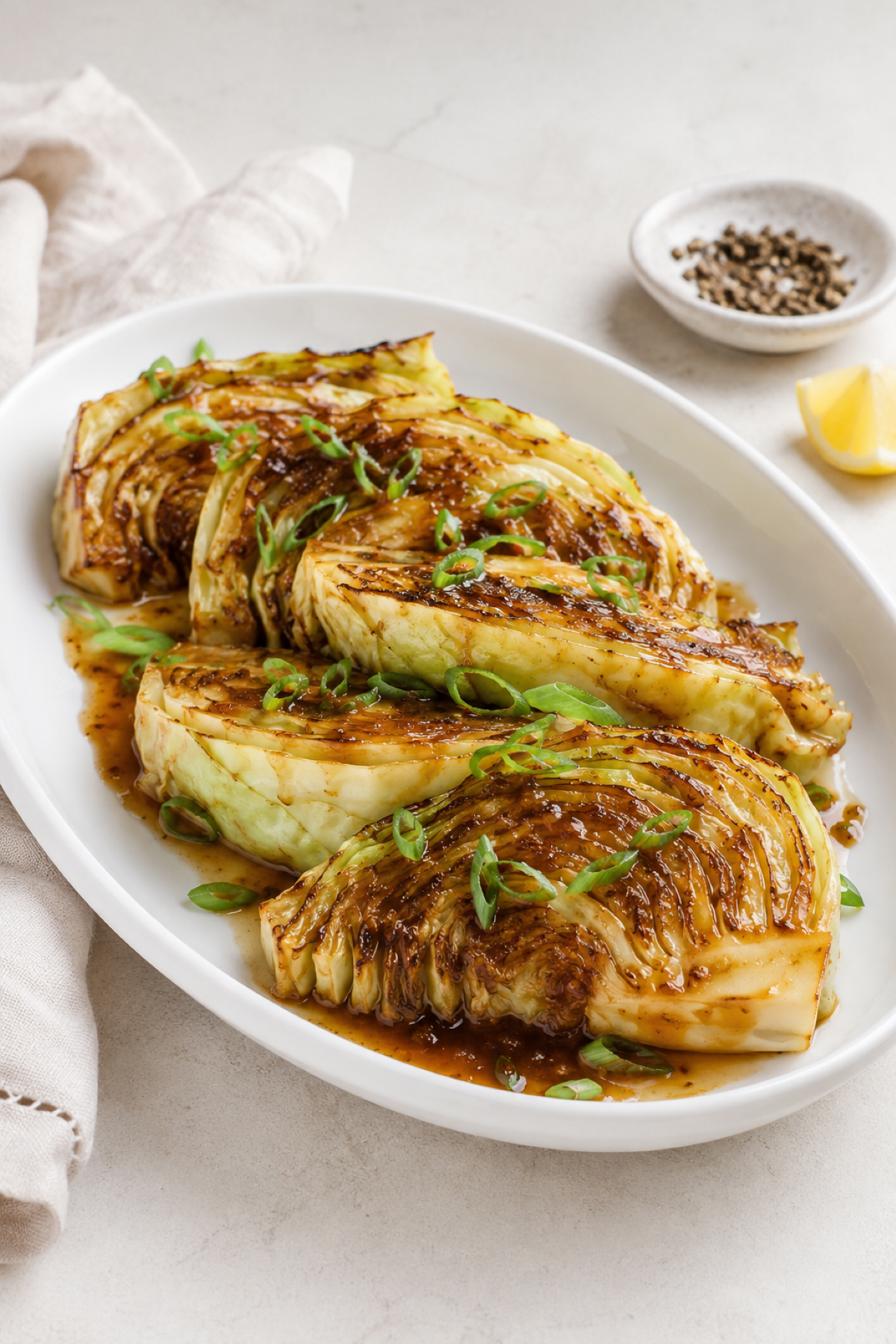
Making cabbage this way creates so many different textures and flavors. White miso and brown butter add flavors that take cabbage to another level. Plus, I never pass on adding butter!
What Makes This Cabbage Worth Making
► This recipe takes a simple head of cabbage and gives it a much better finish than boiling, steaming, or roasting it until soft. The wedges get browned in a hot skillet, so the cut sides turn sweet and caramelized while the center stays tender. Creamy cabbage slaw ideas can elevate any meal, adding a crunchy and refreshing element. You can experiment by mixing in different ingredients like carrots, apples, or a tangy dressing to customize the flavor. This versatility makes it the perfect side dish for summer barbecues or cozy winter dinners.
► The miso brown butter is what makes the dish feel special. It adds a savory, nutty sauce that complements the cabbage without overpowering it. A little lemon keeps the butter from tasting too rich, and the green onions add a fresh bite at the end.
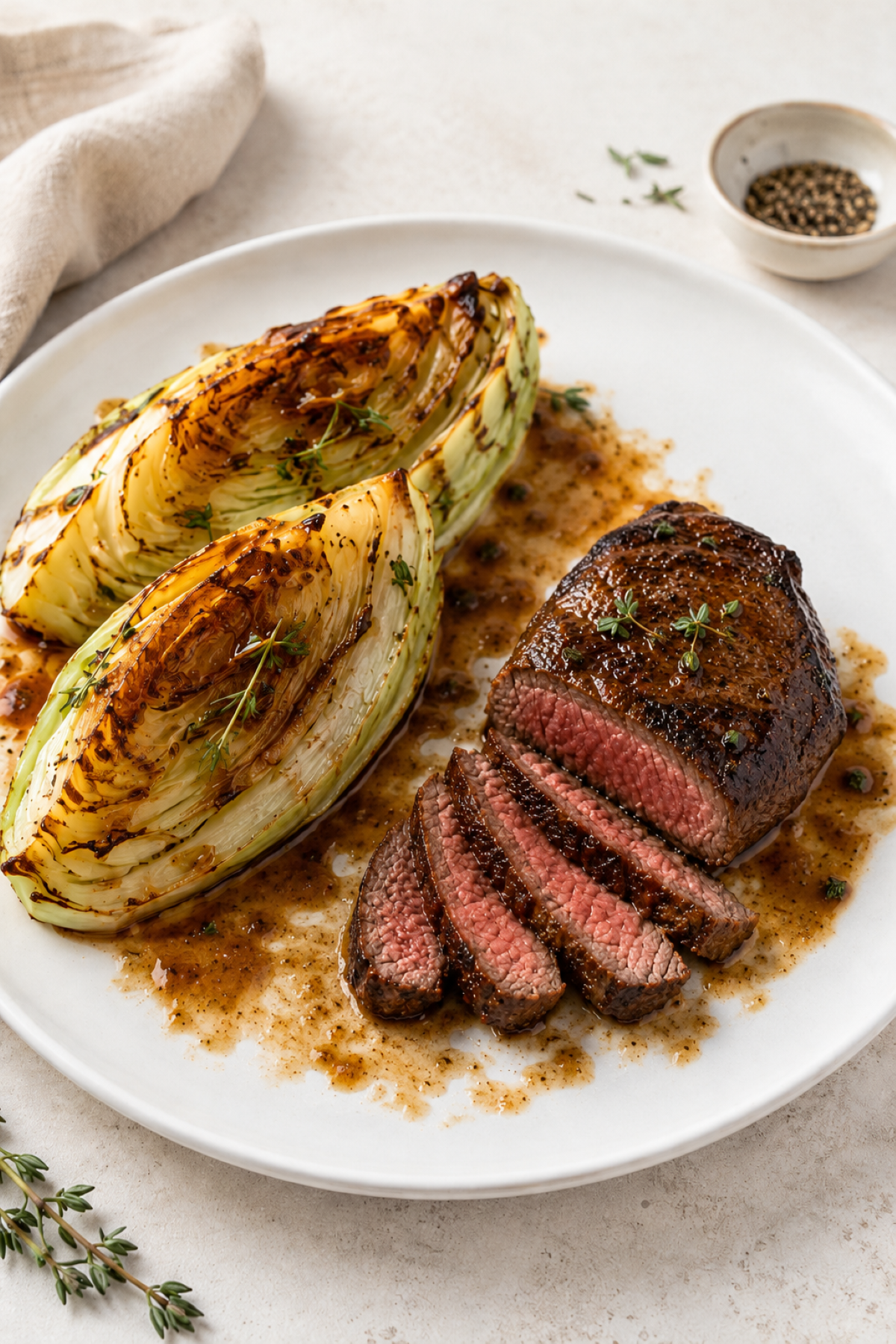
► I like this as a side when the main dish is simple, especially with steak, pork chops, chicken thighs, or pan-seared fish. It gives the plate more variety while still keeping it easy.
What I Learned Making This
- Keep the core attached. It holds the wedges together in the pan. Cut it off and the cabbage starts falling apart before it has time to brown.
- Space the cabbage wedges. If the pan is crowded, the wedges steam. Two smaller batches give you better color than one packed skillet.
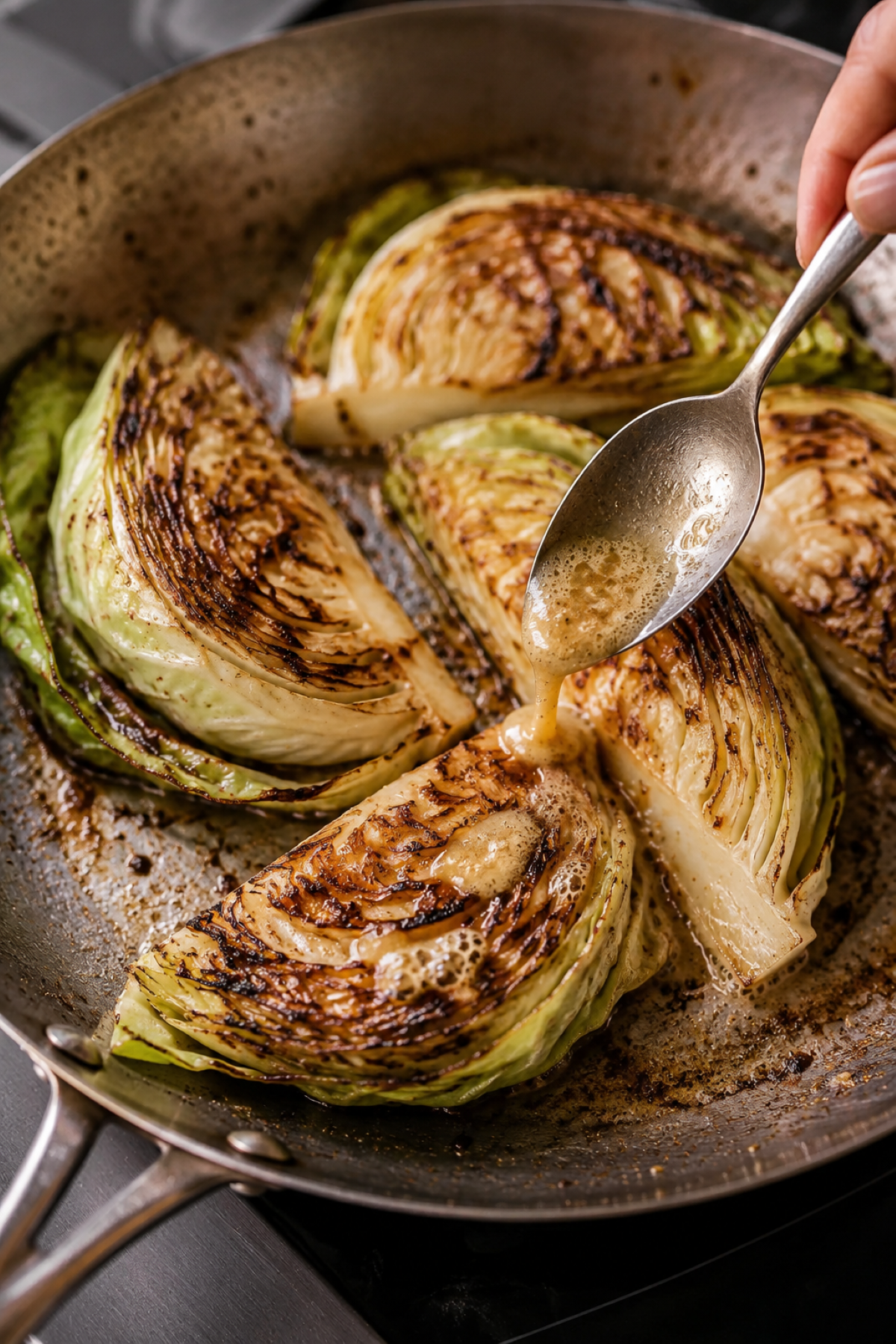
- Cool the pan before adding butter. The skillet will be hot after searing the cabbage. Give it a few minutes so the butter browns instead of burning.
- Add the miso off the heat. Miso can scorch and turn bitter. Stir it into the warm browned butter after the pan comes off the burner.
Why Miso Brown Butter Works with Cabbage
White miso pairs well with caramelized cabbage because it adds savory flavor without overpowering it. Once the wedges brown in the skillet, the cabbage tastes sweeter. The miso balances that sweetness, the brown butter adds nuttiness, and lemon keeps the sauce from feeling too rich.
Key Ingredient Notes
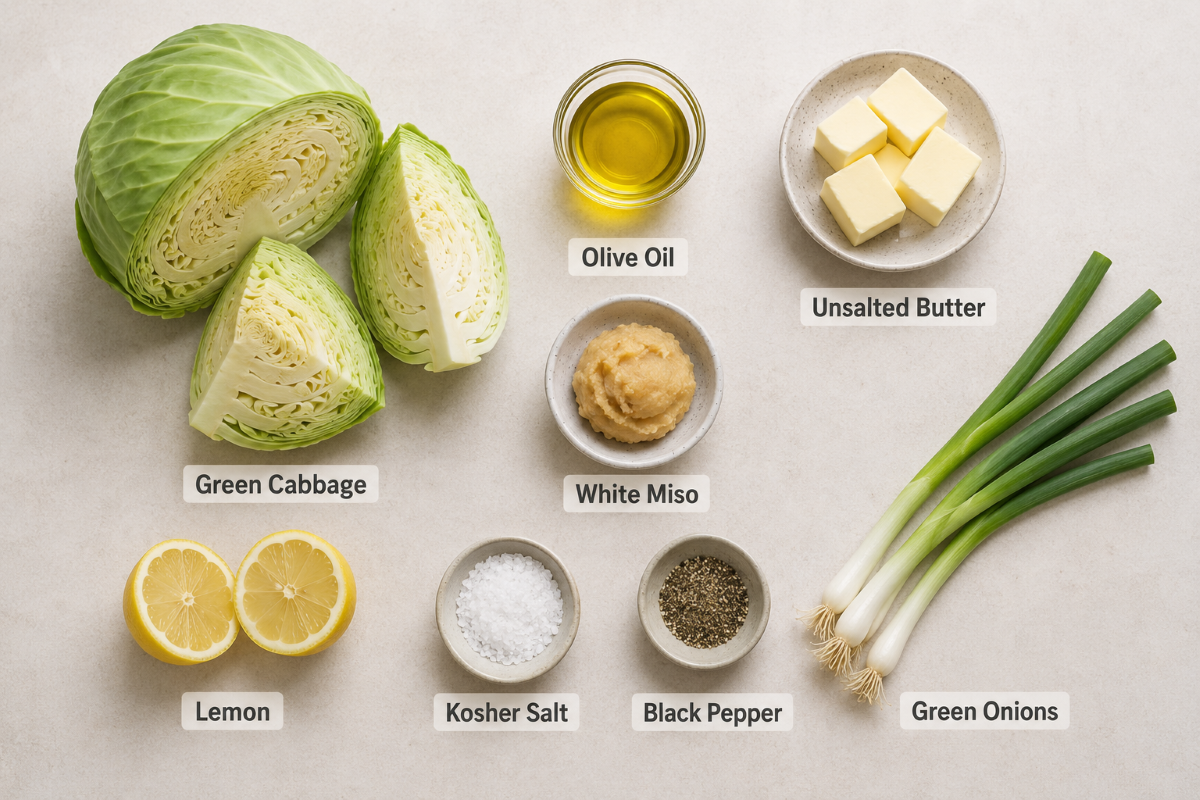
Green cabbage or savoy cabbage. Either one works. Green cabbage is denser and holds a cleaner edge in the skillet. Savoy cabbage is more tender, with ruffled leaves that crisp faster at the edges.
Avocado oil. Use refined avocado oil or grapeseed oil for their neutral taste and high smoke point. Extra-virgin olive oil is not made for high heat.
Unsalted butter. Unsalted butter gives you better control over the sauce. Miso already adds saltiness, and how much varies by brand.
White miso paste. White miso is mild and a little sweet, which fits this sauce. Yellow miso works if that is what you have.
Fresh lemon juice. Use fresh lemon juice if you have it. Bottled lemon juice works, but does not give the sauce the same clean finish.
A Few Things Worth Knowing
- Press the cabbage with tongs or a spatula as it cooks, then leave it alone between presses. I like to use a fish spatula because of its size. Moving it around too much keeps it from browning.
- Add more oil between batches if the skillet looks dry. Cabbage absorbs some oil as it cooks, and the second batch needs enough fat to brown evenly.
- Wipe the pan before making the butter sauce. Burned cabbage bits left in the skillet can make the sauce taste harsh.
- Taste the sauce before adding salt. Miso is salty on its own, so you may not need much, if any.
- If using savoy cabbage, watch it closely. Its thinner leaves cook faster than green cabbage, especially near the end of the sear.
Variations
Anchovy fillets. Add one or two anchovy fillets to the butter as it melts. They dissolve into the sauce and add savory flavor without making the dish taste fishy.
Gochujang. Stir half a teaspoon of gochujang into the sauce along with the miso and lemon juice. It adds mild spice and a little chili flavor.
Toasted breadcrumbs. Toast panko in a dry skillet until golden, then scatter it over the finished cabbage. It adds crunch against the soft center of the wedges.
Storage and Reheating
- Refrigerating. The cabbage keeps for up to 3 days in an airtight container. The butter sauce firms up in the refrigerator and loosens again when warmed.
- Freezing. I do not recommend freezing this dish. The cabbage loses its texture after thawing.
- Reheating. Warm the cabbage in a covered skillet over medium-low heat with a small splash of water or broth.
Enjoy More Miso Butter Recipes
Caramelized Cabbage With Miso Browned Butter
Ingredients
- 2 pounds green cabbage or savoy cabbage
- ¼ cup avocado oil or grapeseed
- 6 tablespoons unsalted butter
- 1 teaspoon freshly ground black pepper
- 1 tablespoon white miso paste
- 1 tablespoon fresh lemon juice
- Kosher salt
- 4 green onions, thinly sliced

Instructions
- Cut the cabbage in half vertically through the core. Cut each half into 4 wedges through the core. Do not cut off the core.
- In a large cast-iron or heavy-bottom skillet, over medium-high heat, add the oil and heat until shimmering. Add the cabbage wedges to the skillet, working in batches if needed. Using tongs, press down on the cabbage pieces to encourage browning, turning once, about 5 minutes or until caramelized on all sides. If the pan looks dry in between batches, add another tablespoon or two of oil. Transfer cabbage to a serving platter.
- Turn off the heat, wipe out any cabbage bits from the pan, and let the pan cool for a few minutes. Add the butter and heat over medium heat. Cook, stirring occasionally and scraping the bottom of the pan, until the butter has browned and smells nutty, 3 to 4 minutes.
- Immediately remove the pan from the heat. Stir in the pepper, miso and the lemon juice. Season to taste with salt, if needed.
- Spoon the miso butter sauce over the cabbage. Served sprinkled with sliced green onions.
Cooks Tips
- Do not remove the cabbage core. It keeps the wedges together while they sear.
- White miso is the best choice for this sauce. Yellow miso works as a substitute. Red miso is too strong.
- Let the pan cool briefly before browning the butter. A skillet that is still too hot from the sear can burn the butter before it browns.
- Taste the sauce before seasoning with salt. Miso brings plenty of sodium on its own.