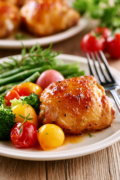
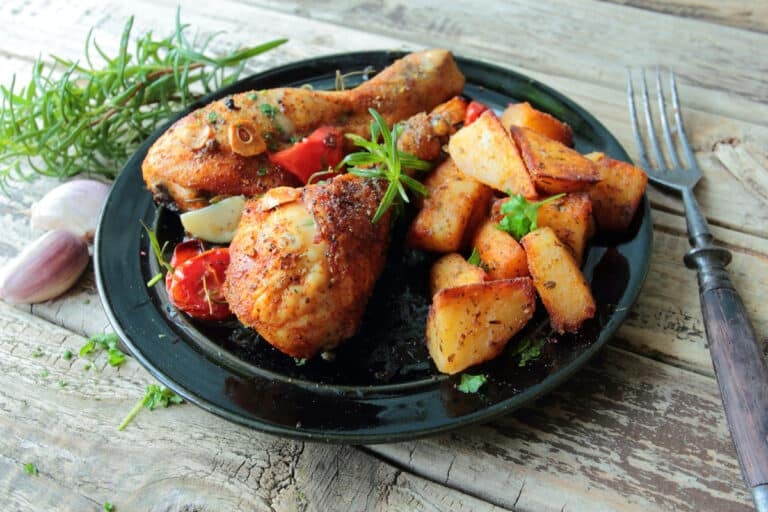
Crispy Gochujang Chicken Thighs with Pan Sauce
Gochujang brings slow-building heat to this skillet chicken, not the sharp burn you get from a bottle of hot sauce. It is a fermented Korean chili paste with deep savory flavor, mild sweetness, and enough heat to make a simple chicken thigh dinner more interesting.
I use it in a marinade with garlic, honey, rice vinegar, soy sauce, and toasted sesame oil. The sauce tastes spicy, savory, a little sweet, and bright enough from the vinegar to keep the chicken from tasting too rich.
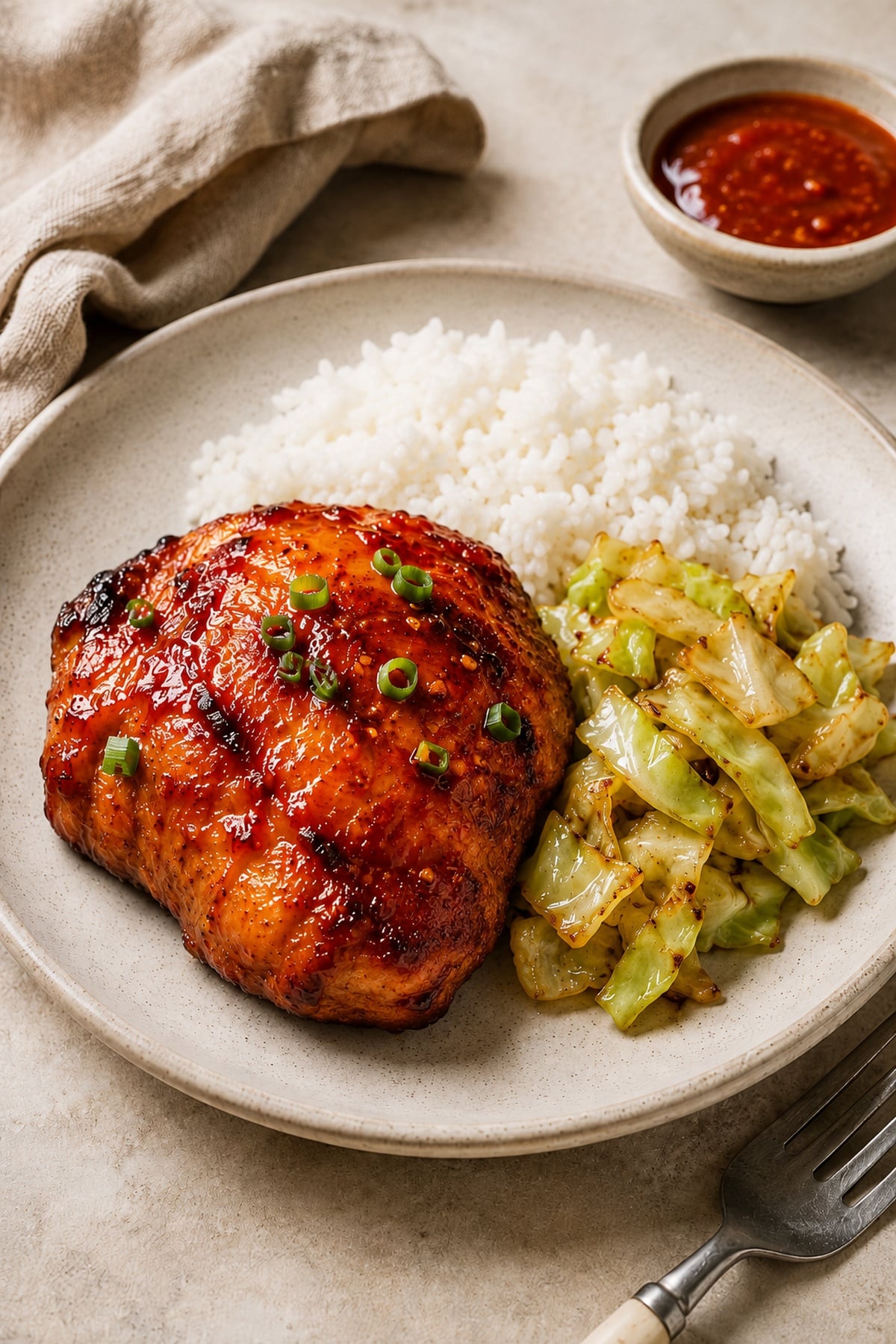
Everything cooks on the stovetop in one skillet. The skin turns deep golden without using the oven, and the sauce comes together while the chicken rests. Start to finish, this takes about 40 minutes.
Table of contents
What This Recipe Does
➤ Bone-in chicken thighs marinate in gochujang, soy sauce, garlic, honey, rice vinegar, and sesame oil. I set aside 2 tablespoons of the marinade first, before the raw chicken touches anything.
➤ The thighs sear skin-side down in a hot skillet until the skin turns deep golden and the marinade forms a light crust. Then they finish on the second side over medium heat until the chicken reaches 165°F.
➤ After the chicken comes out of the skillet, the reserved marinade goes into the pan drippings. It loosens the browned bits, reduces quickly, and is finished with butter to make a final sauce.
What I Learned Making This
- Gochujang spiciness changes from brand to brand. Some pastes are mild and rounded. Others bring more heat right away. Taste yours before mixing the marinade, then adjust if needed.
- Set aside the 2 tablespoons of marinade before the chicken goes near the bowl. Once raw chicken touches the marinade, you cannot use that same mixture as a fast pan sauce unless you cook it fully. Pulling the reserve first keeps this step clean and simple.
- After marinating, pat the skin side of each thigh dry with paper towels. The marinade gives the chicken flavor, but it also leaves moisture on the surface. A firm blot helps the skin brown instead of steam.
- Once the chicken goes into the pan skin-side down, leave it alone. It will stick at first, and that is fine. When the skin has browned enough, it releases more easily. If you pull at it too early, the crust tears and the skin will not crisp the same way.
- The reserved marinade cooks fast once it hits the hot skillet. Garlic can darken quickly, and the sauce can go from reduced to scorched in less than a minute. Stir from the moment it goes in.
- Add the butter after you pull the pan from the heat. If the skillet is still sizzling hard, the butter can separate and make the sauce look greasy. The heat left in the pan is enough to melt it.
What the Sauce Does
This is a pan sauce, not a sticky glaze. It does not cook down until it coats the chicken like lacquer. It stays loose enough to spoon over the thighs and runs into any sides.
Gochujang gives the sauce its backbone. It is made with red peppers, glutinous rice, fermented soybeans, and salt. The heat builds slowly and tastes different from standard hot sauce. It has more savory depth and a spice that lingers.
Rice vinegar keeps the sauce from getting too heavy. Use unseasoned rice vinegar here. Seasoned rice vinegar has added sugar and salt, which changes the sauce. One tablespoon of unseasoned rice vinegar is all you need.
Soy sauce and butter bring salt and richness, so the sauce needs a little acid to pull it back into balance
Do not wipe out the skillet after searing the chicken. Those browned bits are flavor. When the reserved marinade hits the pan, it pulls them into the sauce.
Key Ingredient Notes
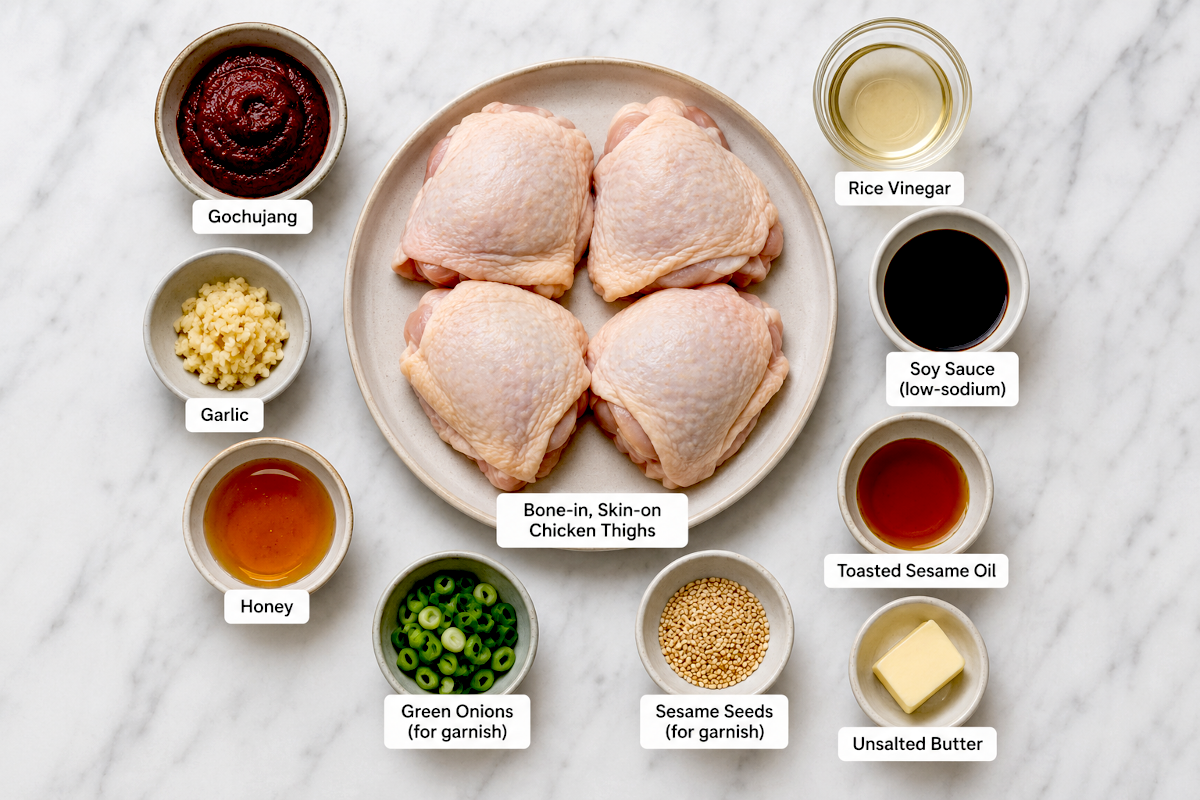
Gochujang. This fermented Korean chili paste is usually sold in the international aisle or at Asian grocery stores, often in a red tub. It is thick, deep red, savory, and mildly sweet. Heat levels vary by brand, and many labels list mild, medium, or hot. If you are new to cooking with it, medium is a good place to start.
Bone-in, skin-on chicken thighs. The bone slows the cooking a little, which gives the skin time to render and brown before the meat overcooks. Thighs vary quite a bit in size, so this recipe uses 2 pounds instead of a set number of pieces. Larger thighs may need a few extra minutes. Use a meat thermometer.
Unsalted butter. Soy sauce and gochujang both add salt, so unsalted butter gives you more control. Use room-temperature butter and swirl it in off the heat.
Rice vinegar. Use unseasoned rice vinegar. Seasoned rice vinegar includes added sugar and salt, so it is not a good swap in this sauce.
Toasted sesame oil. Use toasted sesame oil, not plain sesame oil. The toasted version has a nutty aroma that matters in the marinade.
Soy sauce. Low-sodium soy sauce gives you better control over the salt level. Regular soy sauce works, but taste the finished sauce before adding anything else salty.
Honey. One tablespoon smooths the sharper edge of the gochujang without making the sauce taste sweet. It also helps the sauce look glossy as it reduces.
(See the recipe card below for exact ingredients and measurements.)
Before You Start
Give the skillet two full minutes to heat over medium-high before the chicken goes in. If the pan is not hot enough, the skin steams before it sears. Once that happens, the color does not catch up in the same way.
The 30-minute marinade time is optional, but it helps. The chicken carries more flavor into the pan, and the garlic has time to settle into the sauce. Covering overnight in the refrigerator is also an option.
I pull the chicken at 165°F, which is the safe internal temperature. Bone-in thighs also handle a little extra heat well. Cooking them closer to 175°F makes the meat around the bone more tender because more collagen breaks down.
Taste the sauce before serving. One brand of gochujang might taste balanced, while another might make the sauce taste salty or sharp. A little honey helps if the sauce tastes off. A splash of water loosens it if it reduces too much.
Stainless steel with a heavy bottom is my first choice for this recipe because it holds steady heat during the skin-side sear. Cast iron also works well. I would skip nonstick because it will not give you the same browning or enough fond for the sauce.
Variations
More heat. Add a pinch of gochugaru, Korean red pepper flakes, to the marinade with the gochujang. It gives the chicken a drier, more direct heat. Chili crisp spooned over the finished chicken also works well and adds texture. If you serve it on the side, people can choose whether to add it or not.
Add noodles. Cook udon or soba separately. Loosen the finished pan sauce with a few tablespoons of water or low-sodium chicken broth, then toss the noodles in the skillet. Serve the chicken on top.
With miso. Stir 1 teaspoon of white miso into the reserved marinade before it goes into the pan. White miso adds another layer of fermented flavor without competing with the gochujang.
For a party version, try the Sweet Heat Strawberry Gochujang Wings. That recipe uses gochujang in a reduced glaze over oven-baked wings.
Storage and Reheating
Refrigerating. Store the chicken and sauce together in an airtight container for up to 4 days. The butter in the sauce firms up when cold and loosens again with gentle heat.
Freezing. Freeze the chicken and sauce together for up to 2 months. Thaw overnight in the refrigerator before reheating.
Reheating. Warm the chicken in a covered skillet over low heat with a small splash of water or broth. High heat can make the butter separate from the sauce. If the sauce breaks, it is faster to make a quick fresh sauce in the same pan with gochujang, soy sauce, and a small knob of butter.
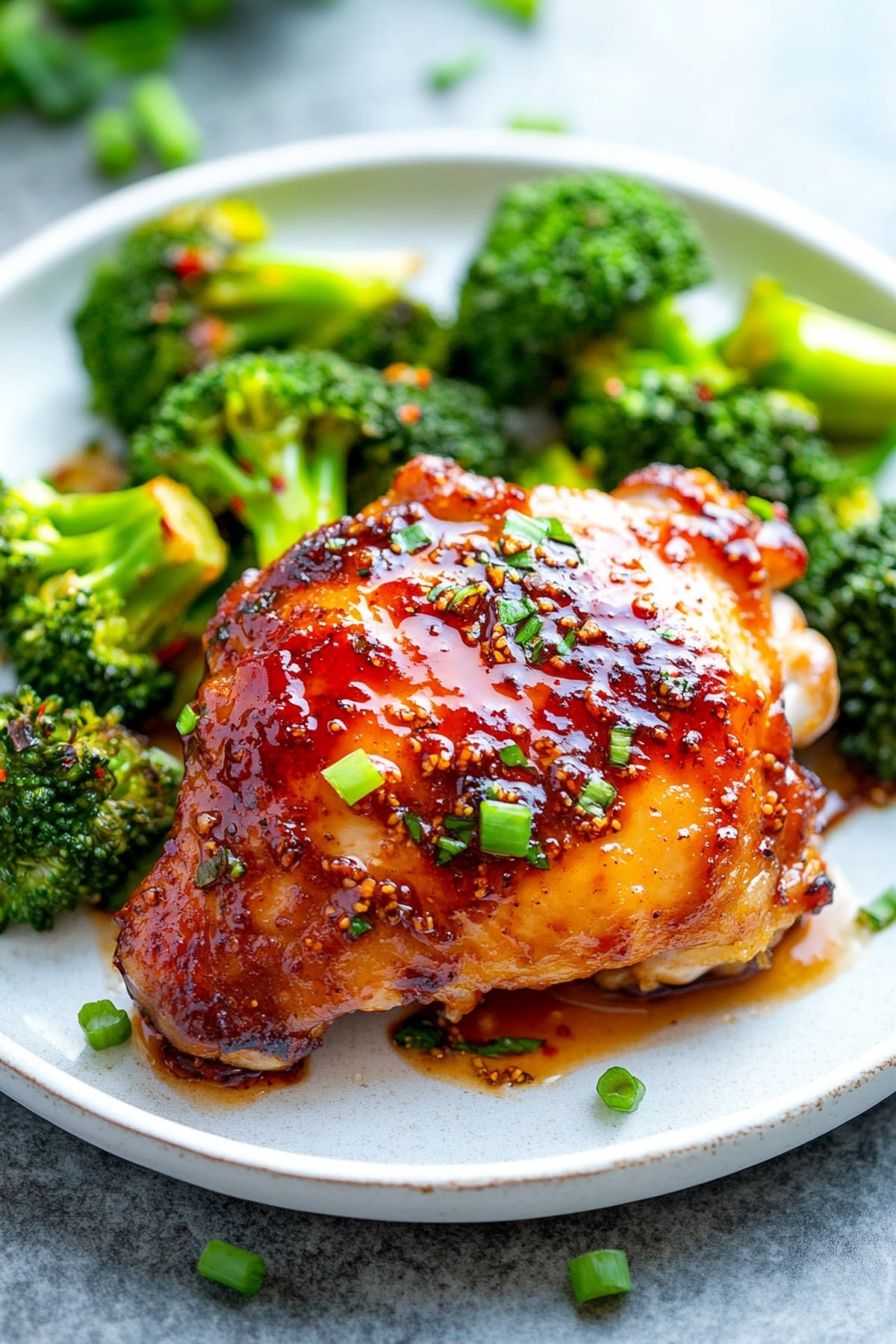
Gochujang Chicken Thighs with Pan Sauce
Ingredients
For the chicken and marinade
- 2 lbs bone-in skin-on chicken thighs (about 4 to 6 thighs)
- 3 tablespoons gochujang
- 2 tablespoons low-sodium soy sauce
- 1 tablespoon honey
- 1 tablespoon unseasoned rice vinegar
- 4 garlic cloves, minced 2 teaspoons minced garlic
- 1 teaspoon toasted sesame oil
- ½ teaspoon kosher salt
- 1 tablespoon grapeseed oil (or other neutral oil)
- 2 tablespoons unsalted butter room temperature
- Green onions, sliced optional
- Sesame seeds optional

Instructions
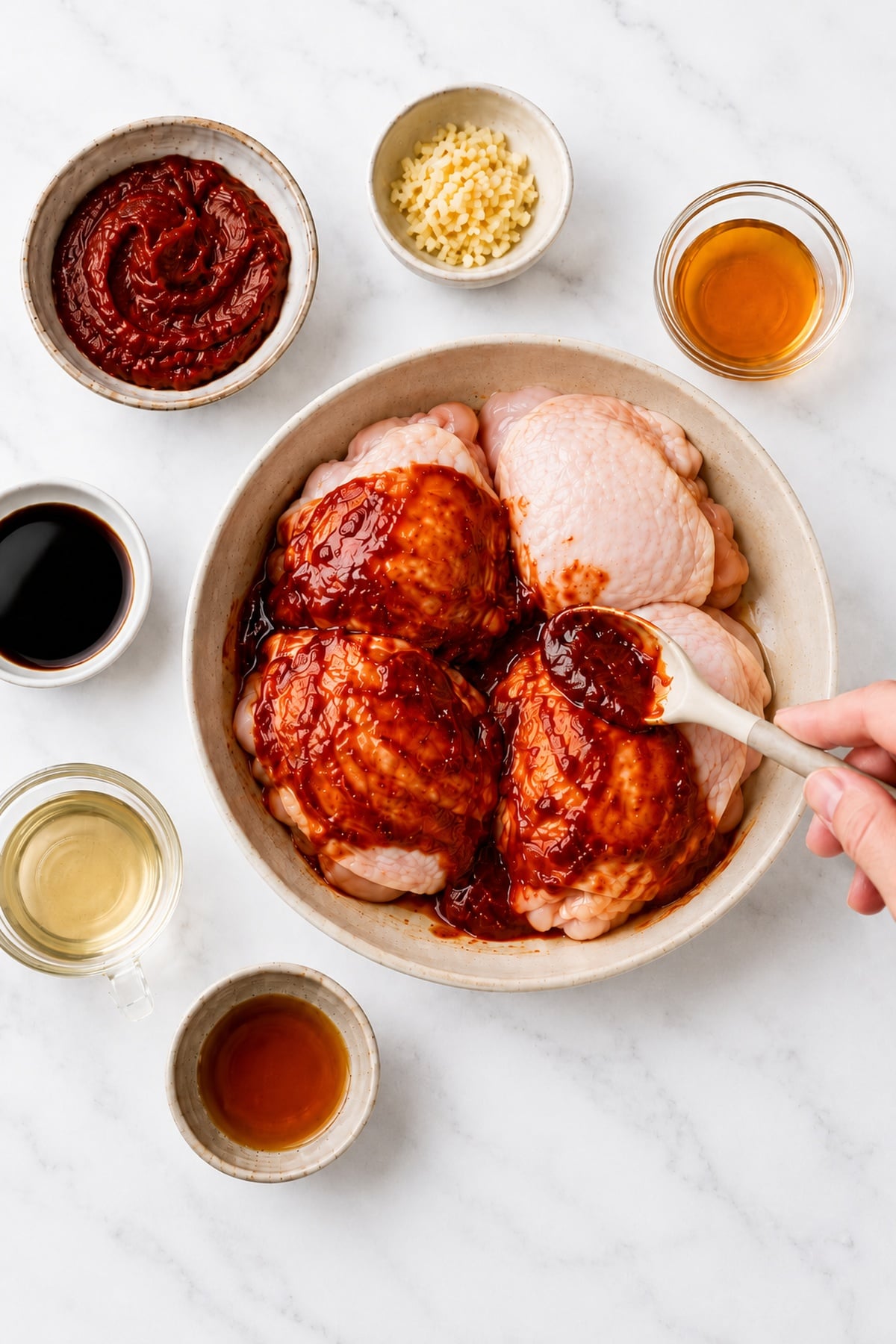
- In a medium glass bowl, combine gochujang, soy sauce, honey, rice vinegar, garlic, sesame oil, and salt; stirring until smooth. Remove 2 tablespoons of the marinade and set aside. Add chicken thighs to the remaining marinade and turn to coat evenly. Marinate at room temperature for 30 minutes, or cover and refrigerate up to overnight.
- Remove thighs from the marinade. Using paper towels, pat the thighs dry.
- Heat a heavy-bottom stainless steel skillet over medium-high heat for 2 minutes. Add oil and swirl to coat. Place thighs skin-side down. Do not move them. Cook 8 to 10 minutes until the skin is deep golden and releases cleanly from the pan.
- Turn over the thighs. Reduce the heat to medium. Cook 10 to 12 minutes until the internal temperature reaches 165°F at the thickest part when tested with a meat thermometer. Transfer to a plate.
- Pour off most of the fat, leaving about 1 tablespoon in the pan. Return to medium heat. Add the reserved marinade. Cook 60 to 90 seconds, stirring continuously, until the raw garlic smell cooks off and the sauce reduces slightly.
- Remove the pan from the heat. Add butter and swirl until it melts and the sauce turns glossy.
- Spoon sauce over the chicken. Serve garnished with sliced scallions and sesame seeds, if using.
Cooks Tips
- The reserved marinade must be pulled out before raw chicken touches the bowl.
- Gochujang heat levels vary by brand. Taste before mixing and reduce to 2 tablespoons if your paste runs spicier.
- For extra-tender thighs, cook to 175°F instead of 165°F. Bone-in thighs handle the higher temperature without drying out.
- Serve with roasted cabbage, sautéed bok choy, or steamed broccoli. All work well with the sauce.
- Leftovers keep refrigerated for up to 4 days. Reheat covered in a skillet over low heat with a splash of water or broth.
Nutrition
Key Takeaways
- Gochujang chicken thighs offer a unique flavor with slow-building heat, enhanced by a marinade of garlic, honey, and soy sauce.
- The dish cooks in one skillet, creating golden skin and a delicious pan sauce from the drippings and marinade.
- Key tips include tasting gochujang for spice level, reserving marinade before raw chicken contact, and patting the skin dry for better browning.
- The pan sauce balances richness with rice vinegar and is best made with unsalted butter to control salt levels.
- Store leftovers in airtight containers and reheat gently to maintain sauce consistency.