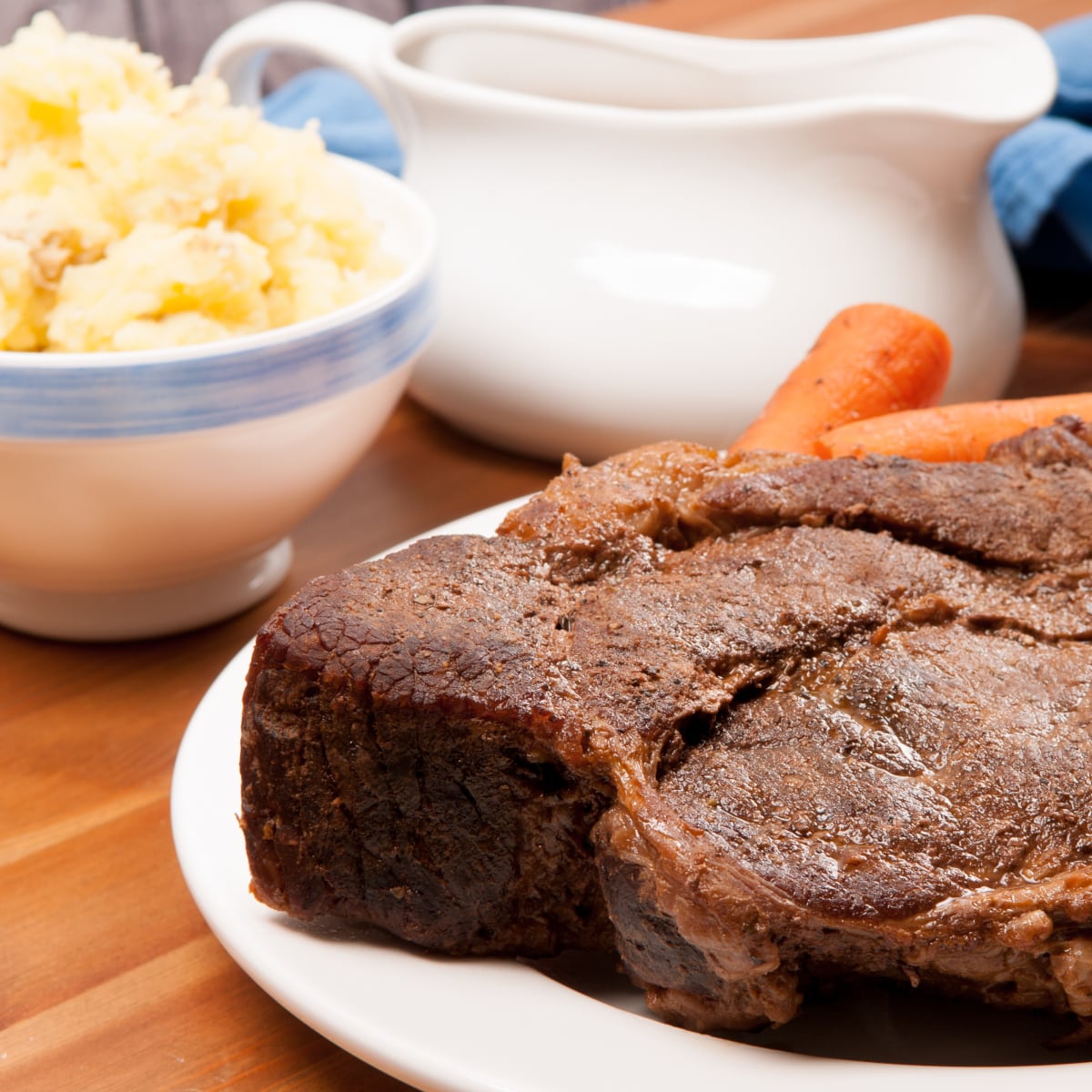
Oven Baked Beef Chuck Roast
Servings: 6
Calories: 332kcal
This recipe is the best oven baked chuck roast recipe and is an updated version of a classic recipe for roasting beef chuck. For an easy recipe that you can cook once and turn into two or more different meals, this easy boneless chuck roast recipe is worthy of your attention.
Print Recipe
Equipment
- Dutch Oven 6 quart or larger
Ingredients
- 2 cups low-sodium beef broth divided
- 3 pounds beef chuck roast
- 2 teaspoons dried celery flakes
- Kosher salt and freshly ground black pepper
- 2 medium onions each cut into 8 wedges
- 2 tablespoons vegetable oil approximately
Carrots and Potatoes (optional)
- 1-1/2 pounds Yukon gold or red potatoes cut into 2-inch chunks
- 5 carrots cut into thick 2-inch pieces (or baby carrots)
Beef Roast Gravy (optional)
- ¼ cup cold water
- 3 tablespoons corn starch
- Kosher salt and freshly ground black pepper

Instructions
- Preheat oven to 300°F.
- Add 1 cup of the beef broth, the chuck roast and the celery flakes into the Dutch oven. Season the roast with kosher salt and pepper. Arrange onion wedges on top of and around the roast.
- Cover the Dutch oven and bake, turning once halfway through cooking and seasoning with salt and pepper, for 2 1/2 to 3 hours or until your roast has an internal temperature of 200°F, or is fork-tender. Add more broth, if needed, during cooking.
- In a large heavy bottom skillet over medium-high heat, add the oil and heat until shimmering. Transfer the chuck roast to the skillet and sear, turning once, about 4 minutes per side or until the roast is nicely browned, adding more oil as necessary. Transfer the roast to a cutting board. Cover the roast with foil and let stand for 5 to 10 minutes.
- Carve the roast into thick slices or chunks and transfer to a serving platter. Using a slotted spoon, remove the onions and arrange around the roast, if desired.
- Skim fat from the juices in the Dutch oven. Add remaining beef broth and heat over medium heat until warm. Ladle mixture into a gravy boat and serve. Or, use the mixture to make the beef gravy below.
Carrots and Potatoes (optional)
- During the last 60 to 75 minutes of cooking, nestle the potatoes and the carrots in the liquids around the roast.
Beef Roast Gravy (optional)
- Skim fat from the juices in the Dutch oven. Transfer juices to the skillet used for browning the roast. Add remaining beef broth to the skillet until you have about 2 cups of liquids. Over medium heat, cook, scraping up any browned bits from the bottom of the pan, until simmering.
- In a small bowl, whisk together the cold water and cornstarch. Slowly whisk slurry into the juices and cook, stirring, 3 to 5 minutes or until gravy is thickened to your liking. Season to taste with salt and pepper.
- Strain gravy into a gravy boat. Serve with the chuck roast.
Notes
*** Note: the nutritional information doesn't include the potatoes or carrots, if using.
Pot Roast
Why This Roast Works
- Rib‑eye taste with a budget cut
- One pot; veggies roast with it
- Very little to do after it's in the roaster
- Leftovers shred or slice for great sandwiches or tacos
How to Pick a Good Roast
- Marbling: Look for tiny flecks of white in the meat that make your beef tender, juicy, and flavorful. Those flecks of fat melt during cooking and baste the beef from the inside out, according to Diana Clark, meat scientist for the Certified Angus Beef ® brand.
- A Little Fat is Good: 1/4 to 1/2 inch fat around the outside edge is ideal. The fat bastes the beef while giving the meat a lovely crust after searing.
- Red Coloring: The color should be bright red and look moist. Leave bland colors for the potatoes.
- Texture: The roast should be firm when touched. Avoid any cuts with large chunks of hard white fat.
- Packaging: Inspect the packaging for holes or tears. Make sure the sell-by date hasn't passed and is within the time you will use it or freeze it. Check the USDA meat grade for one you prefer.
Pot Roast
- Make this into a classic pot roast for a complete meal, add potatoes and carrots to the Dutch oven.
- Add the potatoes and carrots to the roast 60 to 75 minutes before the roast is done. Nestle them into the liquids around the roast.
- Use a slotted spoon to remove the potatoes and carrots from the Dutch oven and arrange them around the roast on the serving platter.
- Keep liquid at least one‑third up the side of the roast so it doesn't dry out.
- A tight lid matters more than fancy cookware.
- Let the roast rest before cutting to redistribute the juices for a juicier roast.
- Store leftover beef separately from reserved gravy or au jus. Both the roast and gravy are easier to reheat if stored separately.
Nutrition
Calories: 332kcal | Carbohydrates: 5g | Protein: 34g | Fat: 20g | Saturated Fat: 9g | Polyunsaturated Fat: 2g | Monounsaturated Fat: 10g | Trans Fat: 1g | Cholesterol: 117mg | Sodium: 250mg | Potassium: 726mg | Fiber: 1g | Sugar: 1g | Vitamin A: 23IU | Vitamin C: 2mg | Calcium: 36mg | Iron: 4mg