How Long to Cook a Roast (Times, Temperatures and a Reverse Timer)
Most roasts take 20 to 30 minutes per pound in a 325 to 350°F oven. But that number only tells you when to start checking. Doneness is a temperature, not a time, and the roast keeps cooking after it leaves the oven — 5°F for a small one, closer to 10°F for anything over four pounds. So you pull it early and let the rest finish the job.
That is the whole trick, and it is the part most charts leave out.
The calculator below does the math backward from the part you actually care about: what time you want to eat. Tell it the cut, the weight and your dinner hour, and it tells you when the roast goes in.
The short version: roasting time depends on weight, but doneness depends on temperature alone. Most beef and lamb roasts run 20–30 minutes per pound at 325–350°F. Pull the roast 5–10°F below the temperature you actually want — it keeps cooking while it rests. Work backward from dinnertime and it lands when you need it.
Table of contents
How Long to Cook a Roast
Roast Timer & Doneness Calculator
Times assume a fully preheated oven and a roast taken out of the fridge 45–60 minutes ahead. A thermometer decides when it is done — the clock only tells you when to start checking.
How long does a roast take per pound?
For most beef and lamb roasts, 20 to 30 minutes per pound is the working range. A lean cut like top round runs 21 to 30 minutes a pound at 325°F. A bone-in ribeye roast wants about 20 to 22 minutes a pound for medium-rare after a hot start. Boneless prime rib cooked low and slow at 250°F takes longer on the clock — 28 to 33 minutes a pound — because the whole point of that method is to get there gently.
Here is the part that surprises people: bigger roasts need fewer minutes per pound, not more. A roast heats from the outside in, and a large one has less surface area for its size, so once it gets going it holds heat and coasts. Doubling the weight does not double the time. This is exactly why a per-pound number is a starting point and not an answer.
Weight sets the time. Temperature sets the doneness. Those are two different jobs and it is worth keeping them separate in your head.
My rump roast and sirloin tip roast both use a hot start and then a lower oven, which changes the math again — the sirloin tip has its own chart by weight further down, because it is the cut I get asked about most.
What temperature should a roast be?
Here is the number that matters, and it is not the one on the front of the package.
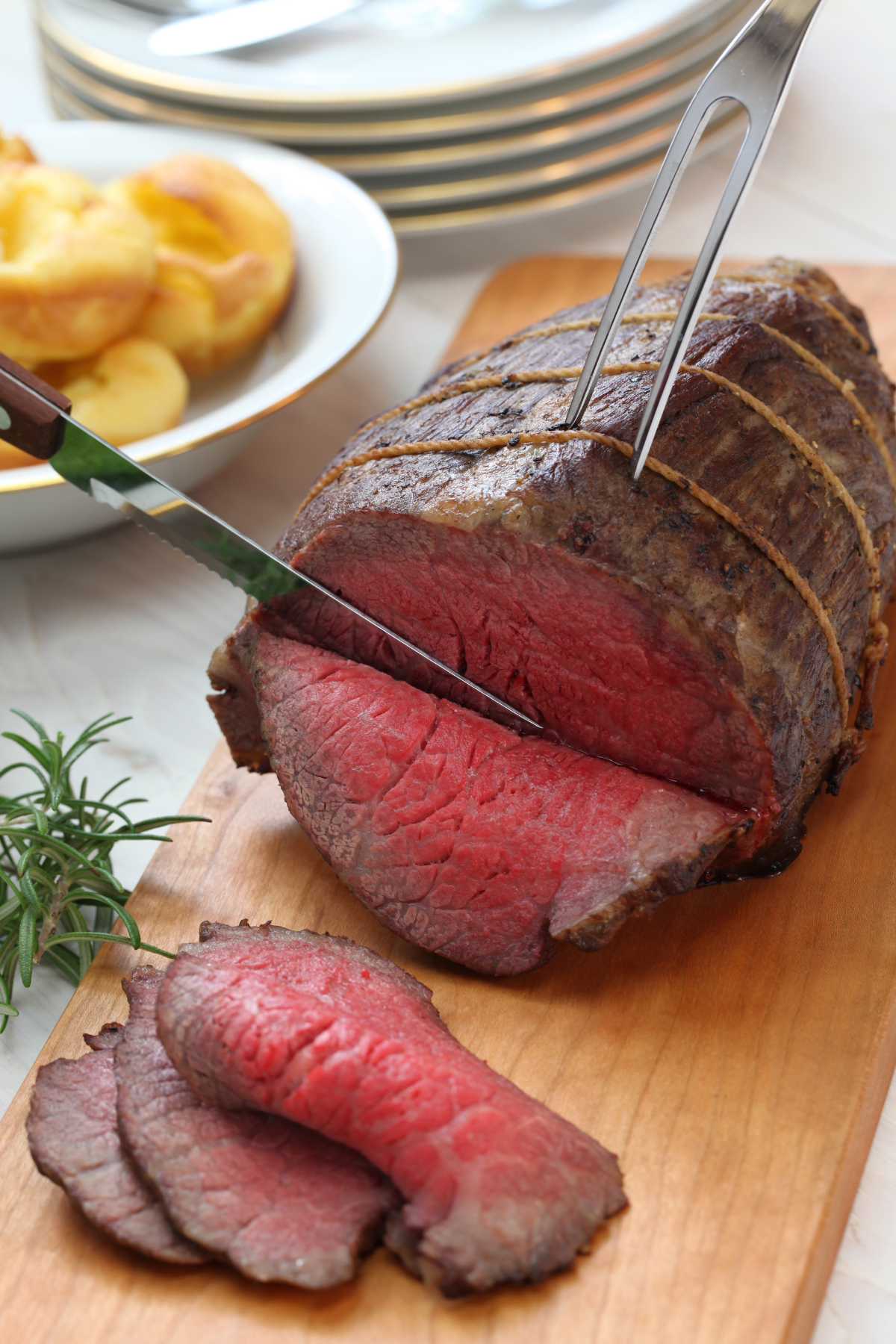
Pull the roast out below the temperature you want to serve it at. A roast does not stop cooking when it comes out of the oven. The outside is hotter than the middle, and that heat keeps traveling inward while it sits on the counter. Under four pounds, expect it to climb about 5°F. Four pounds and over, closer to 10°F.
So if you want medium-rare — 135°F on the plate — a six pound roast comes out of the oven at 125°F. A three pound roast comes out at 130°F. Same doneness, different pull temp, because carryover scales with size.
| Doneness | Serve at | Pull under 4 lb | Pull 4 lb and over |
|---|---|---|---|
| Rare | 125°F | 120°F | 115°F |
| Medium-rare | 135°F | 130°F | 125°F |
| Medium | 145°F | 140°F | 135°F |
| Medium-well | 155°F | 150°F | 145°F |
Then let it rest. Resting is not a nicety, it is the second half of cooking:
- Under 1½ pounds — 5 minutes
- 1½ to 4 pounds — 10 minutes
- 4 pounds and over — 15 to 20 minutes
Tent it loosely with foil. Do not wrap it tight or you will steam the crust you just spent two hours building.
Pork and poultry work a little differently because they have a safety floor rather than a preference scale. Pork is 145°F with at least a three minute rest. Whole poultry is 165°F, measured in the innermost thigh, the innermost wing and the thickest part of the breast. You can still use carryover to your advantage — pull the bird at 155 to 160°F and let it climb to 165°F rather than roasting it there and drying out the breast.
My mom’s roasts came out perfectly done and she never used a thermometer. I’ve decided that at that time, we didn’t have cell phones along with a ton of other distractions. She stayed in the kitchen and actually cooked. She checked on her roasts and paid attention to timing and smells. No distractions. Just a perfect dinner every time.
Roast doneness temperatures
Doneness is a temperature, not a time. Pull the roast below the temperature you want and let the rest finish it.
| Doneness | Serve at | Pull under 4 lb | Pull 4 lb and over |
|---|---|---|---|
| Rare | 125°F | 120°F | 115°F |
| Medium-rare | 135°F | 130°F | 125°F |
| Medium | 145°F | 140°F | 135°F |
| Medium-well | 155°F | 150°F | 145°F |
Beef and lamb roasting times
Minutes per pound. Start checking the temperature at the low end.
| Cut | Oven | Time | Source |
|---|---|---|---|
| Top round roast | 325°F | 21–30 min per lb | cook a top round roast |
| Rump roast | 425°F for 15 min, then 275°F | 28–32 min per lb | cook a rump roast |
| Sirloin tip roast | 450°F for 15 min, then 300°F | see the weight chart below | make a sirloin tip roast |
| Prime rib, boneless | 250°F, then broil to finish | 28–33 min per lb | how to cook boneless prime rib |
| Ribeye roast, bone-in | 450°F for 15 min, then 325°F | Rare 15–18 min/lbMedium-rare 20–22 min/lbMedium 25 min/lb | make the perfect ribeye roast |
| Leg of lamb, bone-in | 425°F, then 325°F | Medium-rare 20 min/lbMedium 25 min/lbMedium-well 30 min/lb | roast a leg of lamb |
| Rack of lamb | 425°F | 20–25 min totalnot per pound — too small to scale | perfectly done rack of lamb |
Sirloin tip roast by weight
Total roasting time, 450°F for 15 minutes then 300°F.
| Weight | Medium-rare | Medium |
|---|---|---|
| 3–4 lb | 1¾–2 hr | 2–2¼ hr |
| 4–6 lb | 2–2¼ hr | 2¼–2¾ hr |
| 6–8 lb | 2¼–2¾ hr | 2¾–3¼ hr |
Pork roasting times
Pork is a safety-floor cut: 145°F, not a doneness scale.
| Cut | Oven | Time | Serve at | Source |
|---|---|---|---|---|
| Pork tenderloin | 425°F | 22–24 min totalnot per pound — too small to scale | 145°F | pork tenderloin roast |
| Pork loin roast, bone-in or boneless | 350°F, uncovered | 20 min per lb | 145°F | USDA |
Whole turkey roasting times
Source: USDA FSIS. 325°F oven. A whole turkey is safe at 165°F measured in the innermost thigh, the innermost wing and the thickest part of the breast.
| Weight | Unstuffed | Stuffed |
|---|---|---|
| 4–8 lb breast | 1½–3¼ hr | — |
| 8–12 lb | 2¾–3 hr | 3–3½ hr |
| 12–14 lb | 3–3¾ hr | 3½–4 hr |
| 14–18 lb | 3¾–4¼ hr | 4–4¼ hr |
| 18–20 lb | 4¼–4½ hr | 4¼–4¾ hr |
| 20–24 lb | 4½–5 hr | 4¾–5¼ hr |
Whole chicken roasting times
Source: USDA FSIS. 350°F oven, safe at 165°F. Add 15–30 minutes if the bird is stuffed.
| Bird | Weight | Time |
|---|---|---|
| Broiler-fryer | 3–4 lb | 1¼–1½ hr |
| Roasting hen | 5–7 lb | 2–2¼ hr |
| Capon | 4–8 lb | 2–3 hr |
| Cornish hens | 18–24 oz | 50–60 min |
Low and slow roasts
These are cooked past done on purpose. Collagen only melts above 190°F, so the doneness scale above does not apply and no carryover allowance is needed.
| Cut | Oven | Time | Cook to | Rest | Source |
|---|---|---|---|---|---|
| Chuck roast | 300°F, covered | 60–70 min per lb | 190–200°F | 10 min, up to 30 | oven chuck roast |
| Brisket, flat | 375°F covered for 1½ hr, then 325°F | 33–37 min per lb | 190–205°F | 15–30 min, covered | tender brisket |
Fully cooked ham
Warming, not cooking.
| Method | Time | Heat to | Rest |
|---|---|---|---|
| 250°F in an oven bag with 4 slits, then 350°F to glaze | 12 min per lbplus about 10 min to glaze | 130°F | 15 min |
Roast cooking times by cut
The charts above have every number. This is the context around them.
Beef roasts
Top round and rump roast are the budget cuts, and they reward slicing thin against the grain more than they reward anything you do in the oven. Sirloin tip sits in the middle — a little more forgiving, and the one cut on this site with a full chart by weight.
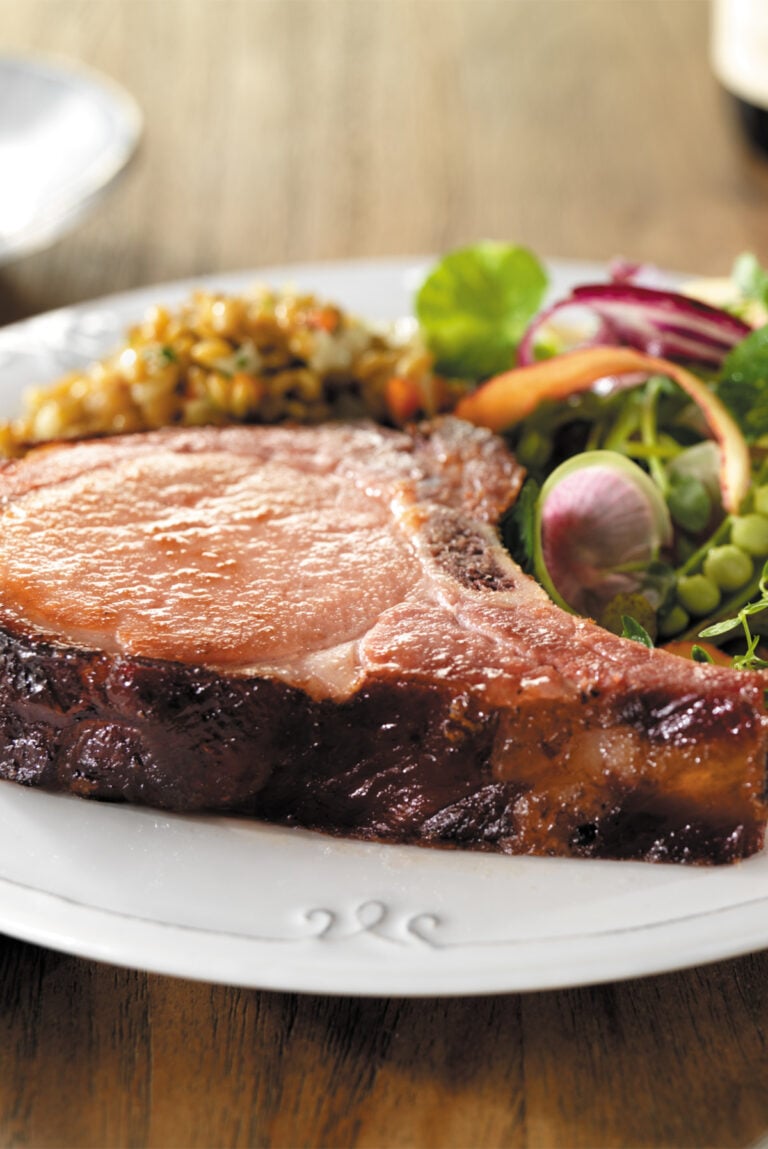
Then there is the good stuff. Boneless prime rib at 250°F and finished under the broiler, or a bone-in ribeye roast with a hot 450°F start. Both are holiday roasts and both are expensive enough that guessing is not an option. Plan about half a pound per person for prime rib.
For a great beef roast, I reach for a chuck roast most of the time. Its an easy and delicious main dish and makes great leftovers for the week.
Lamb
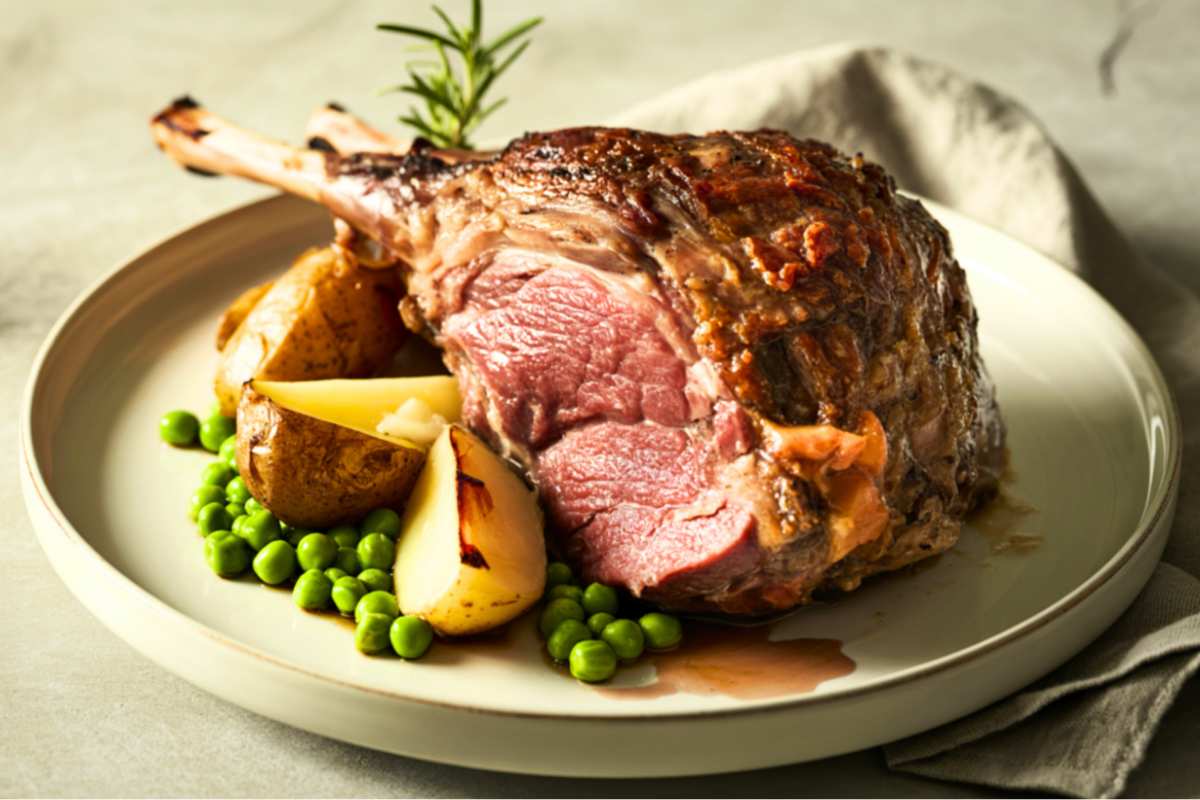
Leg of lamb is easier than its reputation. Twenty minutes a pound for medium-rare, and a five to seven pound bone-in leg feeds a table. Let it sit out for an hour before it goes in — a cold leg cooks unevenly right through the middle, and the outside is well done before the centre catches up.
Rack of lamb is the opposite problem. It is small enough that per-pound math falls apart, so it gets a total time instead: 20 to 25 minutes at 425°F for a 7 or 8 rib rack. Blink and it is medium.
Pork
Pork tenderloin and pork loin are not the same cut, and the confusion causes more ruined dinners than any temperature question. Tenderloin is the small one, a pound or so, and it cooks in about 22 to 24 minutes at 425°F. My honey mustard pork tenderloin is the version I make on weeknights. Loin is the big roast, two to five pounds, and it takes about 20 minutes a pound at 350°F.
Both land at 145°F. Pull the tenderloin at 140°F and let it rest to 145°F.
Turkey and chicken
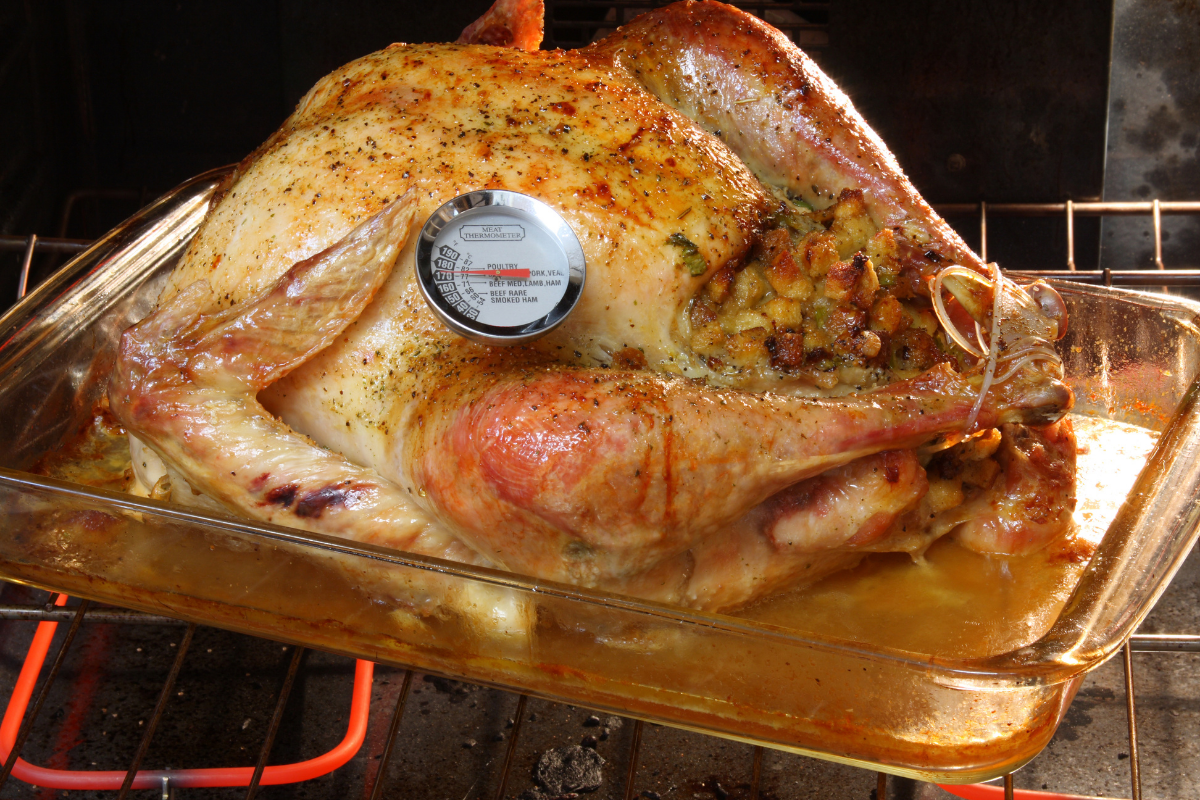
Both go to 165°F. A 14 pound unstuffed turkey takes 3¾ to 4¼ hours at 325°F. Stuffing it adds time — a stuffed bird of the same weight runs 4 to 4¼ hours, and the stuffing itself has to reach 165°F too.
Check three places, not one: the innermost thigh, the innermost wing, and the thickest part of the breast. The breast will get there first. The thigh is the one that keeps you waiting.
Low and slow roasts are a different animal
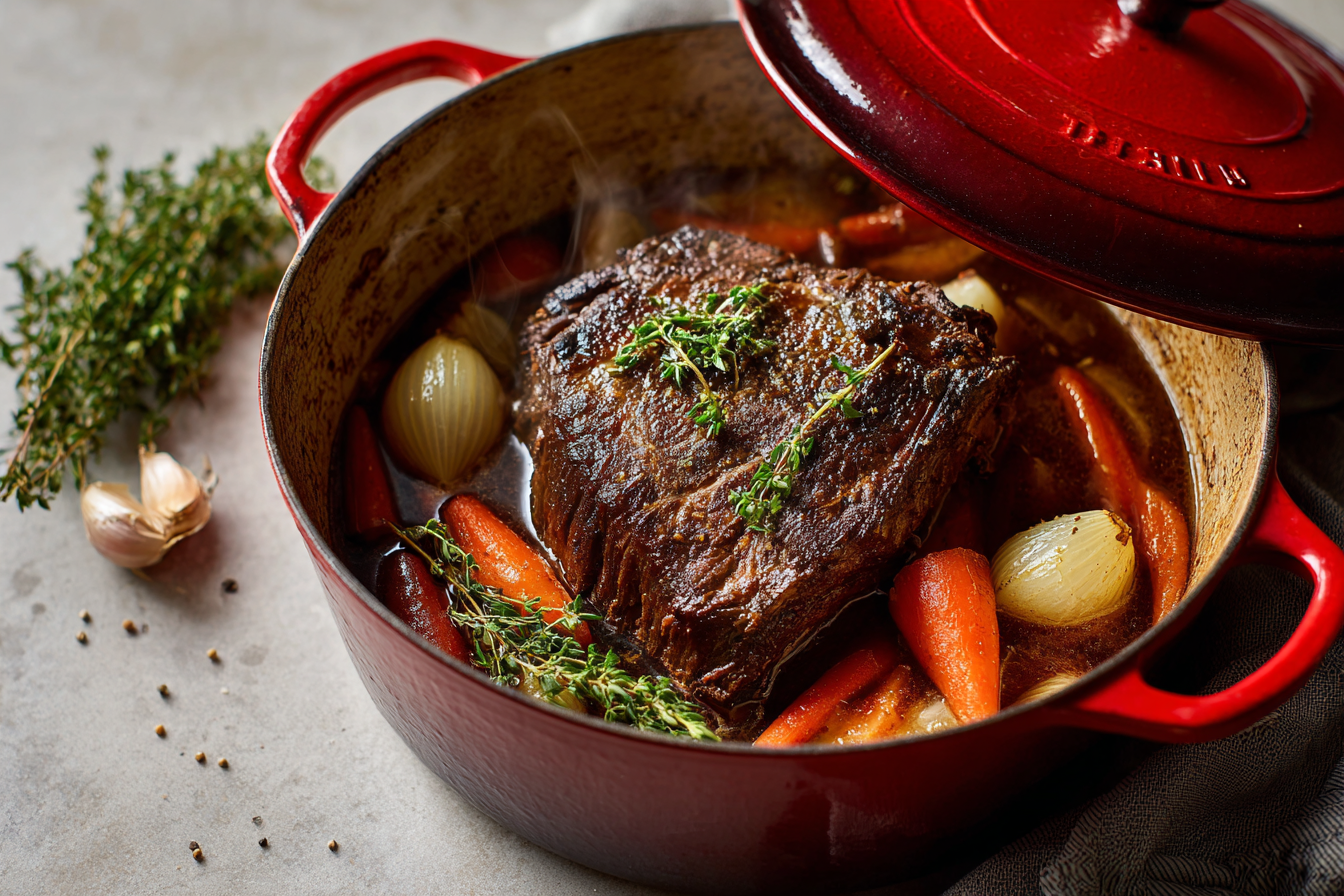
This is the distinction that saves the most dinners, and almost nobody explains it.
A chuck roast or a brisket is not a doneness roast. Pull one at 135°F and it will be technically medium-rare and completely inedible — tough, chewy, and a waste of a good piece of meat. These cuts are full of collagen, and collagen only melts into tenderness above 190°F.
So you cook them past done on purpose:
- 190°F — sliceable
- 200 to 205°F — falls apart at the touch of a fork
No carryover allowance, no pull-early trick. You are not protecting these from overcooking, you are driving them there. Chuck runs about an hour per pound at 300°F, covered. Brisket flat is about 35 minutes per pound, covered the whole way.
If it is still tough, it needs more time — not a higher temperature!
How do you work backward from dinnertime?
This is the question people actually have, and it never gets answered on a chart. Nobody wonders how long a roast takes in the abstract. They wonder what time to put it in so that dinner is at six.
The arithmetic is simple:
Serving time − rest time − cook time = oven time
Say you have a 14 pound turkey and dinner is at 3:00. It needs 4¼ hours at the outside, plus about 18 minutes to rest. That puts it in the oven at 10:27 in the morning. Not “sometime before noon” — 10:27.
Always plan from the long end of the cook time. If it finishes early, it rests a little longer, and resting longer almost never hurts. If you plan from the short end and it runs late, you are carving in front of your guests.
The calculator at the top does this for every cut on this page.
Don’t forget when planning your main course and the roasting time, to plan for side dishes that don’t need the same rack in the oven or a different oven temperature. Use your stovetop, air fryer or Instant Pot for these side dishes and your meal planning will go so much better!
Roasting tips that actually change the result
► Take it out of the refrigerator early. Forty-five minutes to an hour on the counter is ideal. A cold roast cooks unevenly and the outside overshoots while the middle catches up.
► Get a thermometer. A leave-in probe is under twenty dollars and it replaces every chart on this page, including mine. Trust your thermometer. Minutes-per-pound charts are estimates.
► Measure the thickest part, away from bone. Bone conducts heat differently and will read high, which is how a roast comes out rarer than you wanted.
► Insert the thermometer horizontally. For the best temperature test, inserting horizontally gives you the most reliable temp.
► Do not open the oven every ten minutes. Every peek drops the temperature and adds time. A probe thermometer with an external readout solves this permanently.
► Tent loosely, never wrap. Foil pressed against a roast traps steam and softens the crust.
► Carve across the grain. On a lean cut like top round this matters more than anything you did in the oven.
Frequently Asked Questions
At 20 to 30 minutes per pound, a 5 pound roast runs roughly 1¾ to 2½ hours, depending on the cut and the oven temperature. Start checking the internal temperature at the low end of that range — the thermometer decides when it is done, not the clock.
For beef and lamb, serve at 125°F rare, 135°F medium-rare, 145°F medium, or 155°F medium-well. Pull the roast 5°F below those numbers if it is under 4 pounds and 10°F below if it is larger, because it keeps cooking while it rests. Pork is 145°F and whole poultry is 165°F.
Only for low and slow cuts. Chuck roast and brisket are cooked covered so they braise in their own moisture and reach 190 to 205°F. Doneness roasts like prime rib, top round and leg of lamb are roasted uncovered so the outside browns.
Either works. 325°F is the safer default for a large roast because it cooks more evenly. Many good recipes start hot — 425 to 450°F for 15 to 20 minutes to build a crust — then drop to 275 to 325°F to finish.
Five minutes under 1½ pounds, 10 minutes up to 4 pounds, and 15 to 30 minutes for anything larger. Tent it loosely with foil rather than wrapping it tight. Cut into it early and the juices end up on the board instead of in the meat.
About half a pound per person for a boneless roast. For a bone-in ham, plan 2 to 3 servings per pound; a boneless ham gives you about 4 servings per pound.
Print the chart
Everything on this page fits on one page. Print it, tape it inside a cabinet door, and stop looking it up mid-cook.
→ Download the free printable roast times and temperatures chart