Perfect Boneless Prime Rib Roast
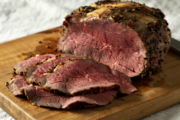
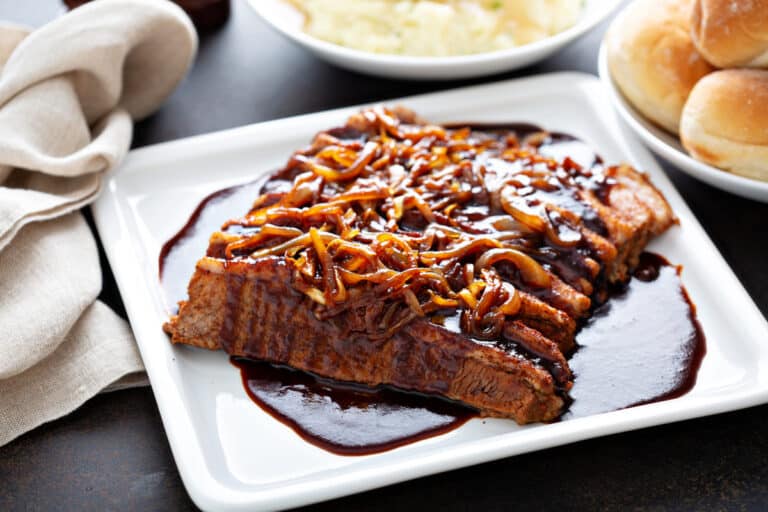
A boneless prime rib roast is an impressive main dish for special occasions or holiday gatherings. Because of its rich flavor and tender texture, it makes for a stunning centerpiece. This cut of meat offers the rich flavor of a standing rib roast without the bones.
You do not need a complicated method for a good beef roast. A well-marbled roast, a thermometer, and a steady oven will take you a long way.
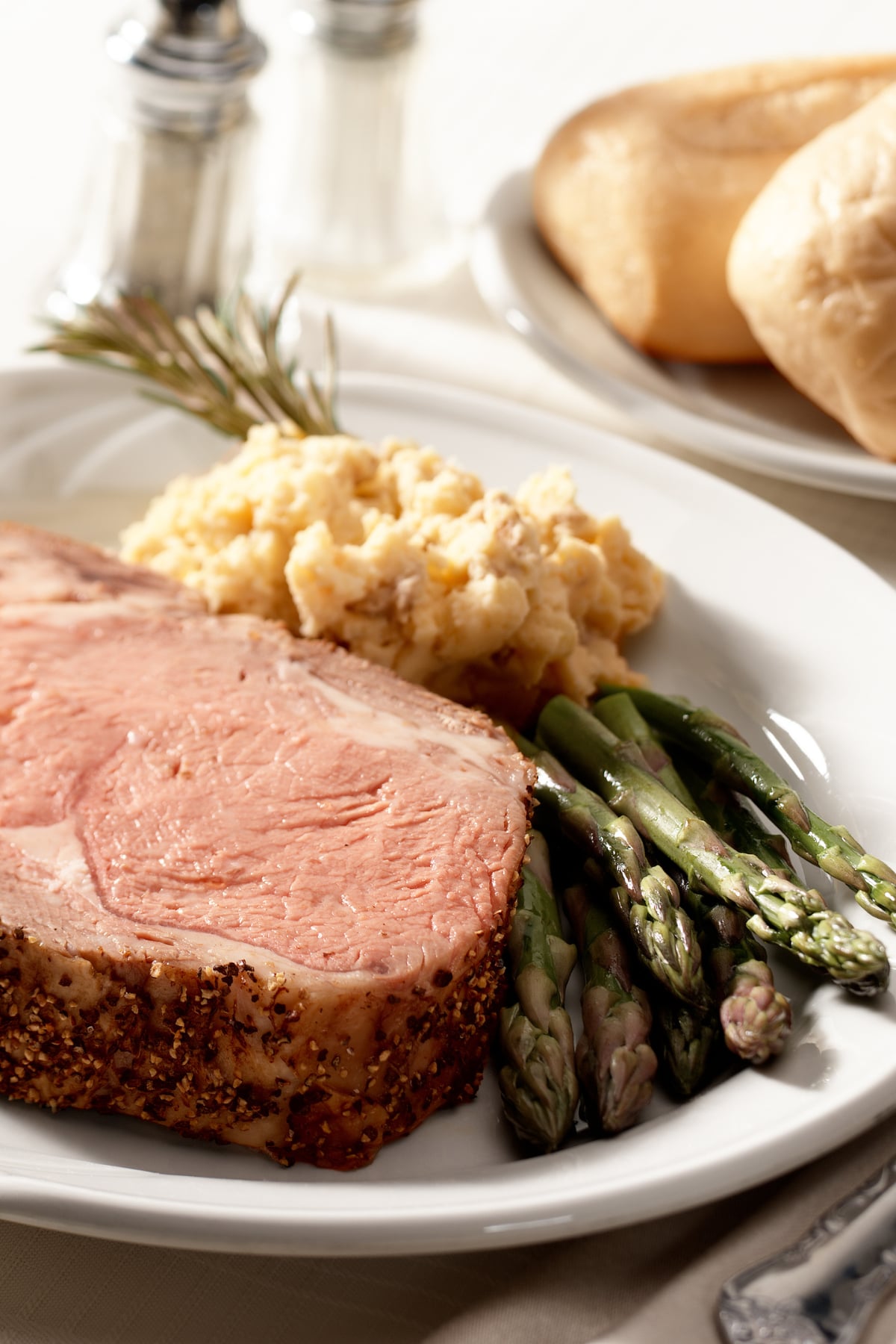
Table of contents
Key Takeaways
- A Boneless Prime Rib Roast is perfect for special occasions due to its rich flavor and tender texture.
- Salting the roast a day ahead and using a thermometer ensures even cooking and ideal doneness.
- Rest the roast after cooking for about 20-30 minutes to keep slices moist and flavorful.
- Serving suggestions include au jus, roasted vegetables, and creamy sauces to complement the prime rib.
- Store leftovers in an airtight container and use them within 3 to 4 days for the best taste.
Why This Recipe Works
This method keeps the roast simple and gives you more control. Salting a day ahead helps season the meat all the way through, the low oven cooks it evenly, and the short broil at the end gives you the browned crust people want from prime rib.
A boneless prime rib roast is also easier to handle, easier to carve, and easier to serve neatly. With a good thermometer, you do not have to guess your way through an expensive cut of meat.
A prime rib is too expensive to guess at. Run the numbers through my prime rib cooking time calculator before it goes in and you’ll know your oven time to the minute.
Choosing the Cut
A boneless prime rib roast is a good choice when you want the rich flavor of rib roast without dealing with the bones at carving time. It is easier to season, easier to slice, and easier to portion for guests.
If your budget allows, USDA Prime gives you the most marbling. USDA Choice is still an excellent option and is often the better value for home cooking. Look for good marbling across the roast and a fat cap that is not overly thick.
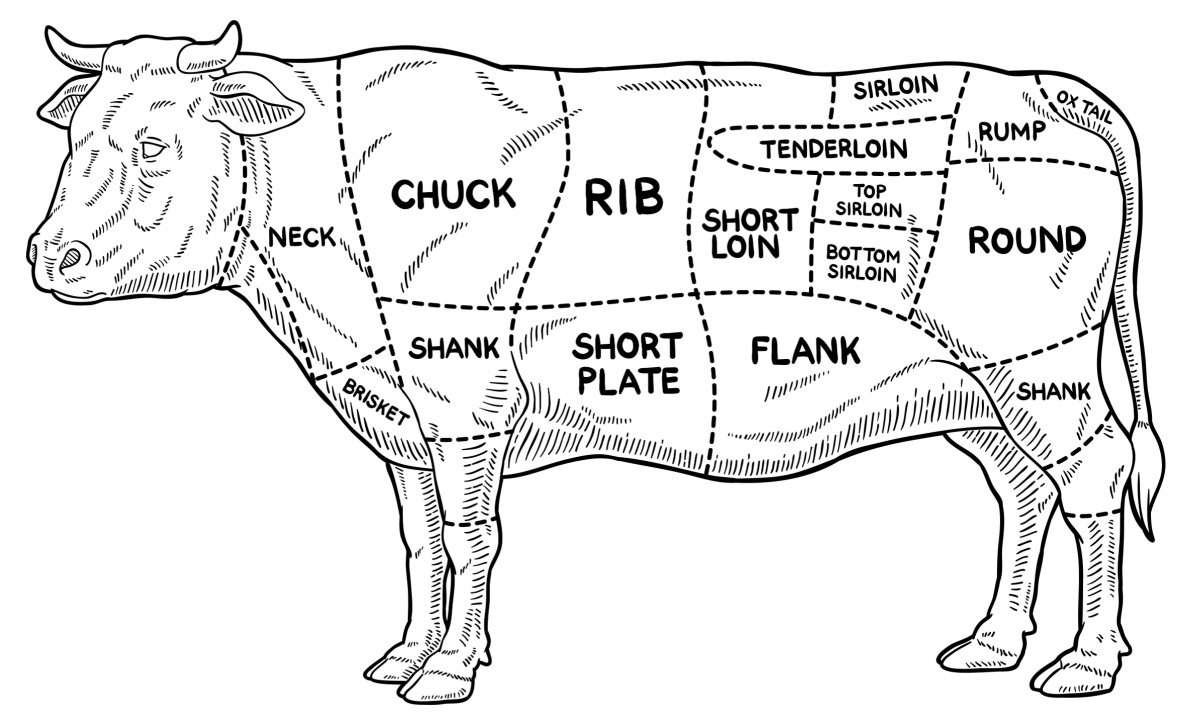
A ribeye steak and a boneless ribeye roast both come from the same primal section as a prime rib roast, so they share a similar taste and texture.
You may hear butchers talk about the small end and the large end of the rib section. The small end is a little more uniform. The large end usually has a bit more fat and beefy character. Both work well, so I would buy the roast that looks best in the case instead of overthinking it.
A boneless roast will shrink about 20% and bone-in roasts lose about 30% of the final weight (because of the extra weight of the rib bones). A 7-pound roast will be enough for about 10 people.
Resting and Carving
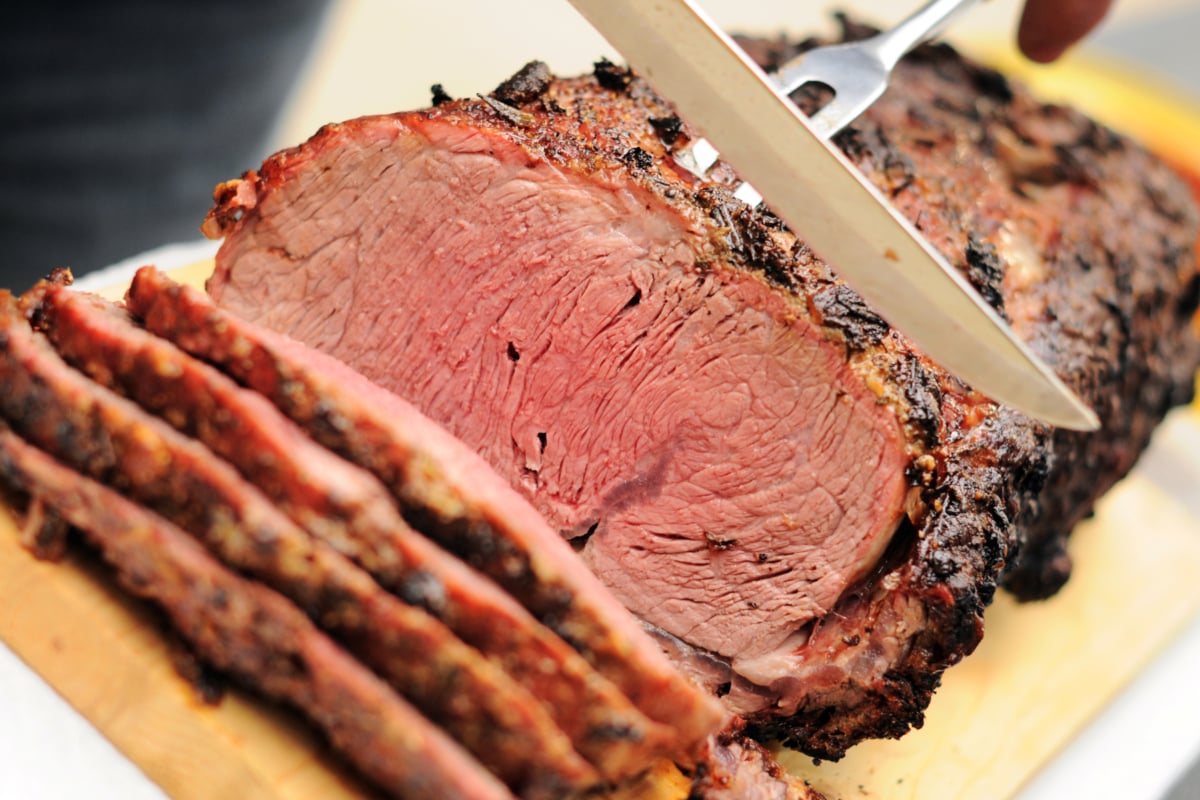
After you remove your boneless rib roast from the oven, tent it loosely with aluminum foil and allow it to rest on a cutting board for about 20-30 minutes. That gives the juices time to redistribute back into the meat so the slices stay moist
When you are ready to carve, use a sharp carving knife. Cut across the grain, into thick even slices.
Equipment
- Roasting Pan and Rack: Elevates the meat for even heat circulation.
- Meat Thermometer: Essential for tracking internal temperature.
- Cutting Board: For letting the roast rest and for carving.
- Carving Knife: Helps you get clean, even slices.
Ingredients
- Boneless prime rib roast (about 7 pounds)
- Kosher salt and freshly ground black pepper
- Optional herbs (such as rosemary, thyme, or garlic)
Substitutions
- Kosher Salt and Black Pepper: Feel free to use sea salt or seasoned salt if you prefer a different flavor profile.
- Herbs: Swap rosemary or thyme for dried oregano or basil.
- Boneless vs. Bone-In: The method remains similar, but cooking time may increase slightly if you use a bone-in prime rib roast.
Directions
- Salt the roast the day before. Score the fat cap lightly in a crosshatch pattern, then season the roast well with kosher salt. Refrigerate it uncovered for at least 24 hours.
- Bring the roast to room temperature. About 30 to 60 minutes before roasting, remove the roast from the refrigerator. This is enough time to help the roast cook more evenly.
- Preheat and season. Heat the oven to 250°F. Set the roast on a rack in a roasting pan, fat side up, and season with black pepper.
- Roast. Roast until the center reaches the pull temperature. For rare, look for about 115°F. For medium-rare, look for about 125°F. For medium, look for about 135°F. (see the chart below)
- Rest the roast. Tent loosely with foil and let it rest for about 30 minutes. The temperature will keep rising as it rests, so this is where the roast gets to your ideal final temperature.
- Broil to add color. Set the oven to broil and return the roast, just long enough to brown the outside, approximately 5 minutes. Watch the roast closely so it doesn’t overcook.
- Slice and serve. Carve into thick slices and serve immediately with au jus.
For the best texture, many home cooks pull prime rib well before the final serving temperature and let carryover heat finish the roast during the rest. That is why the roast temperatures in Step 4 look unusually low.
| Doneness | Final (serving) | Pull for a 5–7 lb roast |
|---|---|---|
| Rare | 125°F | 115°F |
| Medium-rare | 135°F | 125°F |
| Medium | 145°F | 135°F |
If you prefer to follow USDA minimum guidance for beef roasts, cook to 140°F and rest the roast for at least minutes until the roast reaches 145°F. Your finished roast will be closer to medium, with a warm pink center, or medium-well with a slightly pink center.
Top Tip
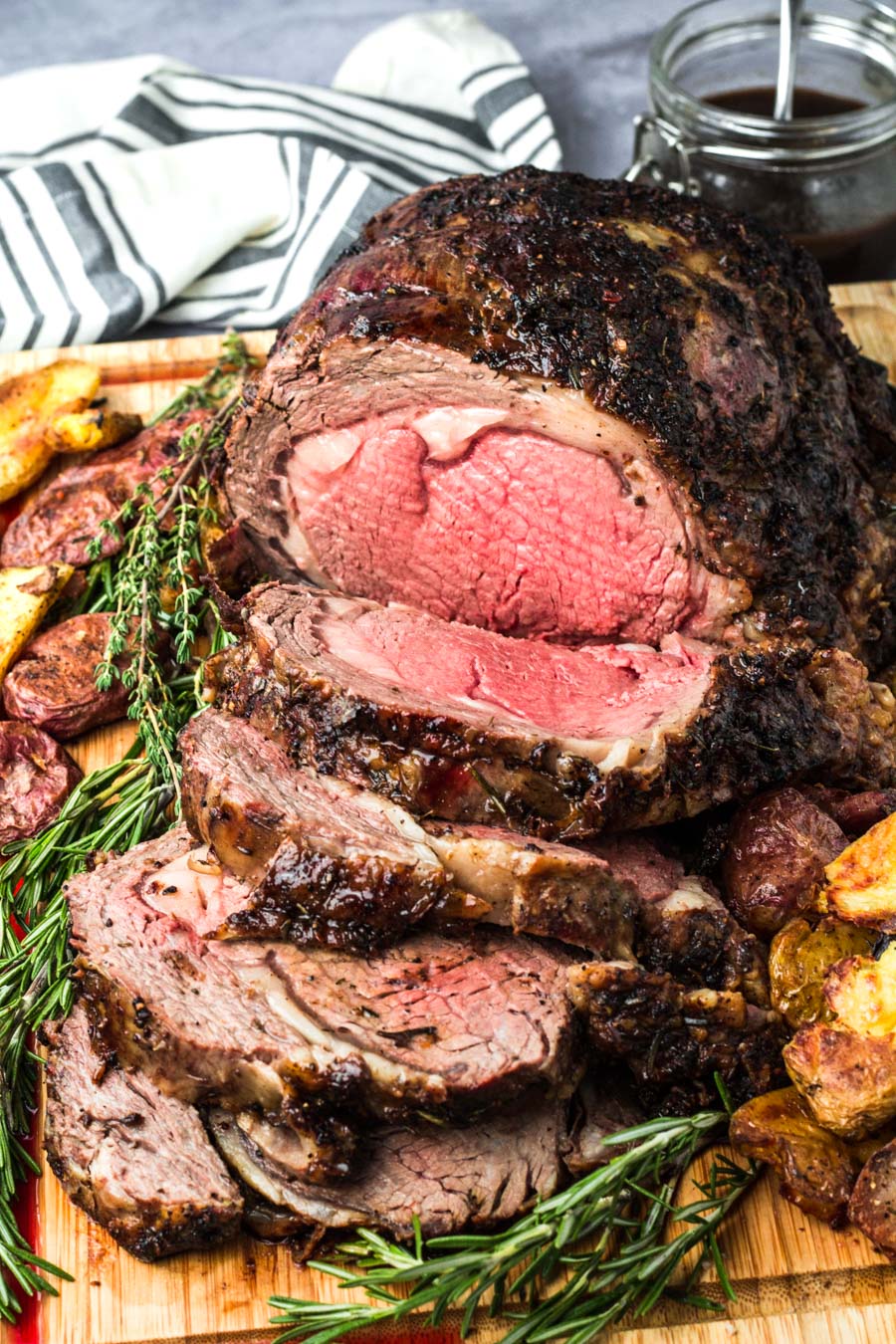
Aim to remove the roast from the oven about 5-10 degrees before your final target. The roast’s internal temperature will continue rising while it rests, ensuring it lands at the perfect doneness.
Serving Suggestions
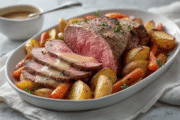
Au jus is a classic sauce to enhance the flavor of your boneless prime rib recipe. Make it by deglazing the roasting pan with beef broth and simmering until it reduces slightly.
Other favorite additions include roasted carrots and potatoes, Brussels sprouts, creamy horseradish sauce, and baked or mashed potatoes. This simple combination highlights the roast’s rich taste and balances the meal with complementary textures and flavors.
Variations
- Garlic Butter Crust: Mix softened butter with minced garlic and herbs, then spread it all over the roast before cooking.
- Spicy Rub: Create a bold rub with chili powder, smoked paprika, and cayenne pepper for a smoky kick.
- Red Wine Jus: Deglaze the roasting pan with red wine and beef broth for a rich, savory sauce.
Leftovers and Storage
Leftover prime rib should be stored in an airtight container in the refrigerator and used within 3 to 4 days. Reheat it gently with a little beef broth or pan juices so it does not dry out.
You can also freeze portions in an airtight container for up to 6 months. Thaw overnight in the refrigerator before reheating.
With these techniques, including monitoring cooking times, using a meat thermometer, and letting the roast rest, you can create an easy prime rib recipe that delivers perfect temperature and great taste.
FAQs
How long does it take to cook a boneless prime rib roast?
What temperature should boneless prime rib be cooked to?
What oven temperature is best for boneless prime rib?
How long should a boneless prime rib roast rest before slicing?
Is boneless prime rib as good as bone-in prime rib?

Perfect Boneless Prime Rib Roast
Equipment
Ingredients
- 5 pounds boneless prime rib roast
- Kosher salt
- Freshly ground black pepper

Instructions
24 Hours Before Roasting
- Using a sharp knife, cut through the roast’s fat cap in a 1-inch crosshatch pattern, being careful not to cut into meat.
- Season roast with 2 tablespoons kosher salt over the entire roast including into the crosshatch cuts. Refrigerate roast, uncovered, for at least 24 hours.
5 Hours Before Serving
- Remove roast from the refrigerator and let stand 30 minutes to 1 hour or until room temperature.
- Adjust oven rack to lower-middle position and preheat oven to 250 degrees F.
- Place roast, fat side up, on a rack set in a large roasting pan. Season roast with black pepper. Roast 3 to 3-1/2 hours or until a meat thermometer registers 115 degrees for rare, 125 degrees for medium-rare, or 135 degrees for medium. *
- Remove roast from the oven and tent loosely with aluminum foil. Let rest for about 30 minutes.
- Meanwhile, prepare the au jus, if using.
- Set oven temperature to broil. Return the roast to the oven and broil, about 5 minutes, or until the fat cap is evenly browned.
- Transfer roast to a carving board. Slice meat into cut into 3/4-inch-thick slices. Serve with au jus and side dishes.
Cooks Tips
| Doneness | Final (serving) | Pull for a 5–7 lb roast |
|---|---|---|
| Rare | 125°F | 115°F |
| Medium-rare | 135°F | 125°F |
| Medium | 145°F | 135°F |