Sticky Miso Salmon Bowl
Salmon broils quickly, which is both the reason I like it and the reason I watch it closely. A few minutes under high heat turns the surface glossy and charred in spots. A minute too long and the fish starts to dry out.
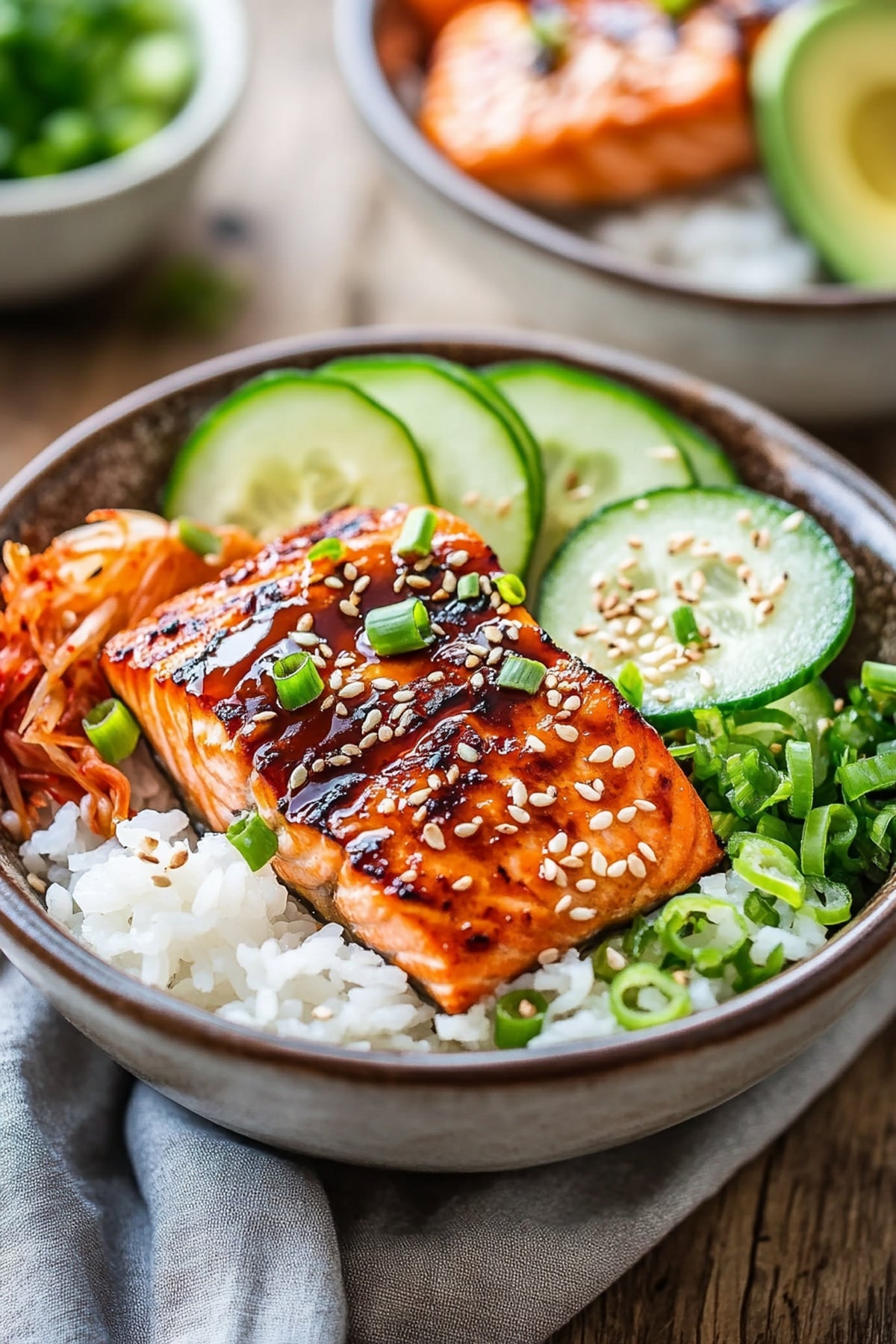
For this bowl, I use a quick marinade made with white miso, honey, ginger, and grapefruit. It takes a few minutes to whisk together, then it goes on the salmon while the rice cooks. Under the broiler, the honey caramelizes and the miso darkens into a sticky glaze.
The rice gets finished with butter and green onions. The salmon goes on top. Kimchi, cucumbers, and chile crisp are the toppings I reach for first.
Table of contents
What This Recipe Does
► The simple marinade does the main work here. White miso gives the salmon a savory base. Honey helps the surface brown and turn sticky under the broiler. Ginger keeps the glaze from tasting flat, and grapefruit adds citrus without making the marinade too sharp.
► I coat the salmon with the marinade and let it sit while the rice cooks. The salmon goes under the broiler with the marinade still on it. This gives the edges their color and the center its glossy finish.
► The rice is simple, but it’s an important foundation. Butter and green onions make it taste finished without turning the bowl heavy. Then the toppings bring in contrast. Kimchi adds heat. Cucumber cools it down. Chile crisp adds crunch if you want even more heat.
► Everything comes together in about 35 minutes.
What I Learned Making This
Pat the salmon dry before it goes into the marinade. I do this with a paper towel right before the fish goes in the bowl. Moisture on the surface thins out the marinade and slows browning under the broiler. It takes a few seconds and changes how the glaze sets.
Do not drain the marinade off the salmon. Arrange the fillets on the sheet tray and spread any extra marinade from the bowl over the tops. All of it goes under the broiler. That extra coating gives you the sticky surface and charred edges.
Do not lift the lid on the rice. The rice finishes cooking in its own steam. If you lift the lid too early, the rice often stays firm in the center.
Let the rice steam off the heat for the full 10 minutes. It may look done before then. Leave it covered. The texture tightens up and the grains separate more cleanly instead of clumping.
Monitor the salmon closely. Five minutes under the broiler gives you medium-rare. Seven minutes gives you medium. Your best bet is to use an instant-read-thermometer to check the internal temperature.
How To Tell When Salmon Is Done
While I don’t like contradicting the USDA’s safe temperature guidelines for salmon is 145°F, most chef’s agree that at this temperature, your salmon will be dry, tough and overcooked.
After several tests, America’s Test Kitchen recommends cooking salmon to 120° to 125°F, which is medium rare, for best results. If you want medium salmon, 130° to 135°F also works.
The salmon will look slightly translucent (125°) to mostly opaque (135°) in the center with a light pink exterior.
The type of salmon matters too. Farmed Atlantic salmon can be cooked to 125 degrees with good results, while wild salmon is better at 120 degrees. The reason is that farmed salmon will have less collagen and more fat than wild salmon and will need a bit longer to get done.
What the Marinade Does
- White miso is mild, salty, and savory. Honey is sweet. Under the broiler, they caramelize fast against the surface of the fish. The edges darken first. The center stays sticky.
- The ginger adds a warm and spicy note to the marinade. It also helps in breaking down proteins, which speed up the cooking without drying out the surface. I use fresh grated ginger here. But know that you can use a jarred ginger if you prefer, but it will not be as brightly flavored.
- Grapefruit is the part that makes this glaze different. Lemon and lime both work with salmon, but grapefruit has a slight bitterness under the citrus. That keeps the honey from taking over.
- The oil helps the marinade cling to the salmon and keeps the surface from drying out before the glaze sets.
Key Ingredient Notes
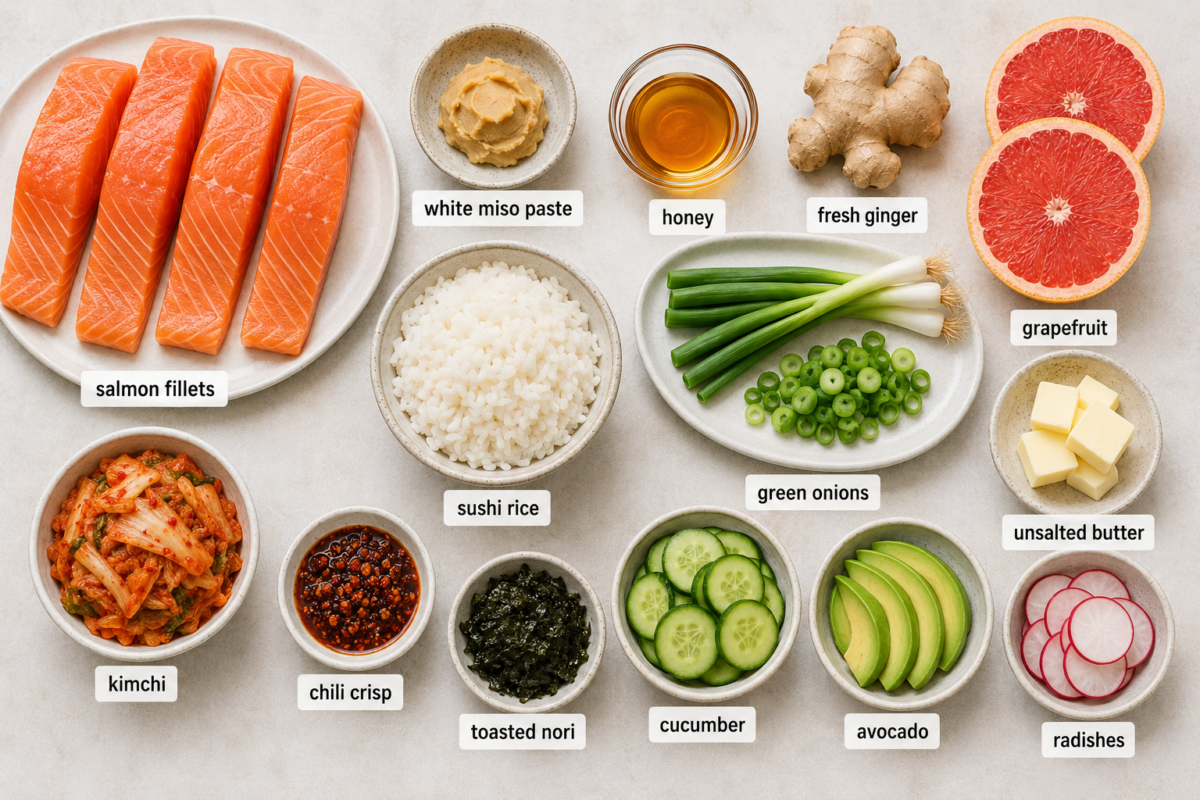
Skinless Salmon Fillets work better in a marinade. Skin also does not caramelize the way we want the salmon to here. I buy fillets close in size and thickness so they finish at the same time. Six to eight ounces each is the right size range.
White Miso Paste is mild and a little sweet. It gives just the right amount of flavor that would be overpowered by a yellow or red miso.
Honey is what gives the glaze its sticky finish. I do not substitute agave or maple syrup in this recipe. They behave differently under high heat, and the glaze does not set the same way.
One Fresh Grapefruit gives you the right amount of zest and juice you need. The zest matters more than the juice. Don’t be tempted to use bottled grapefruit juice.
Sushi Rice is a short grain rice that holds together in the bowl. Long-grain rice works, but the texture is looser and the bowl feels less cohesive.
Toppings are listed as optional, but I think they are part of the dish. Kimchi adds fermented heat. Chile crisp adds heat and crunch. Cucumber give the bowl that refreshing crisp taste. Avocado adds fat if you want a richer bowl. Toasted nori adds a briny note that works well with the miso.
A Few Things Worth Knowing
- Set the oven rack about 5 inches from the broiler before turning it on. Too close, and the glaze burns before the fish cooks through. Too far, and you miss the char.
- Line the sheet tray with foil. The marinade drips and scorches onto bare metal. I always line the pan because cleanup is otherwise more work than it needs to be.
- Broilers vary more than people expect. Check the salmon at 4 minutes the first time you make this. If the edges are getting too dark, move the rack down one level.
- Marinating at room temperature while the rice cooks is enough. The fish is thin, and the marinade is concentrated. It does not need an overnight rest.
- Add the butter to the rice right before serving. Fluff the rice and stir in the green onions at the same time. Both taste better fresh off the stove.
Variations
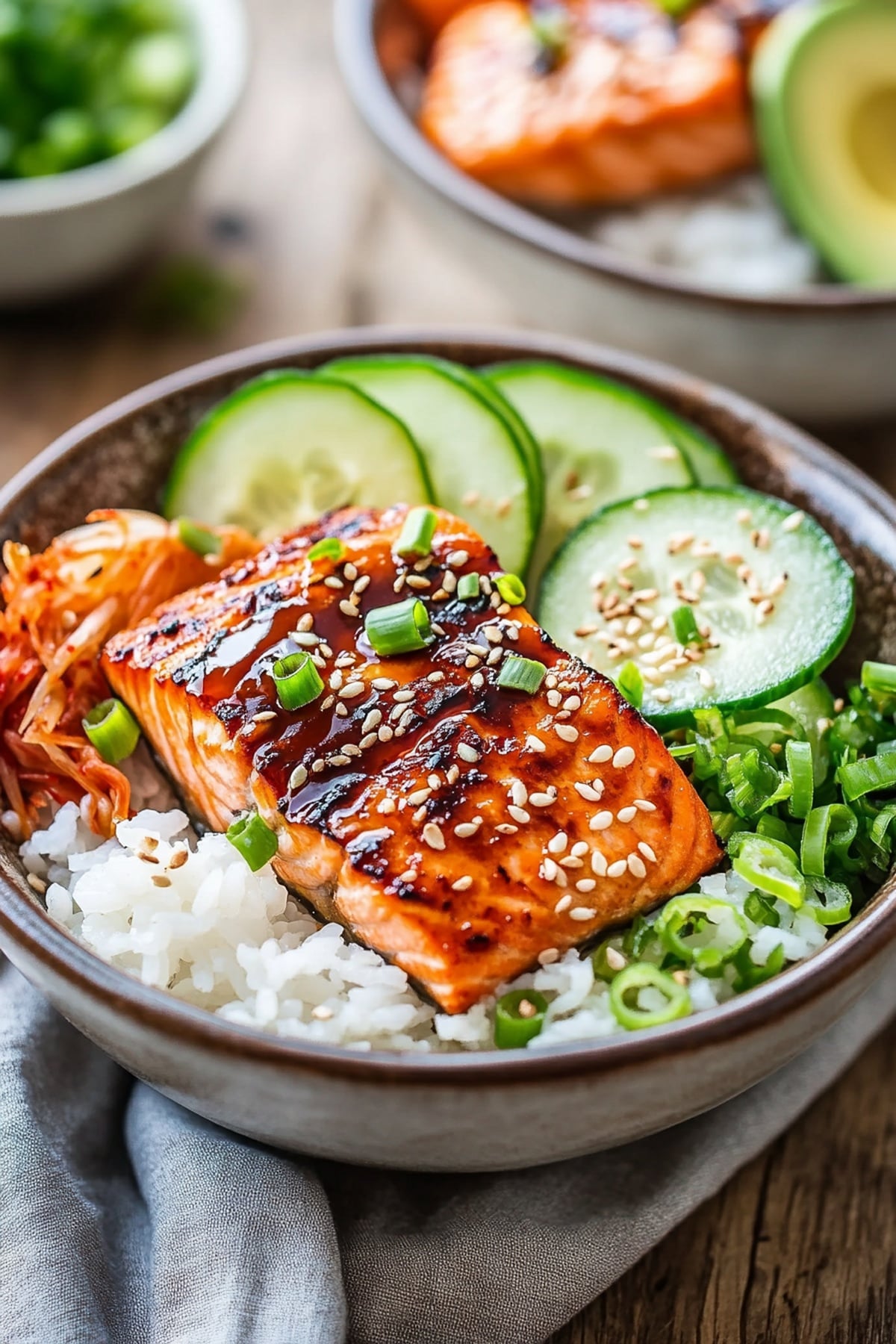
With Gochujang. Add 1 teaspoon gochujang to the marinade with the miso and honey. It adds heat and deepens the color of the glaze under the broiler.
With Sesame. Add 1 teaspoon toasted sesame oil to the marinade and scatter toasted sesame seeds over the finished bowl. It adds a nutty note without changing the direction of the recipe.
With Soba Noodles. Use cooked soba noodles instead of sushi rice. Toss the noodles with a small amount of sesame oil and the green onions. This version eats lighter and works well when you want a cooler bowl.
Storage and Reheating
Refrigerating. Store the salmon and rice separately in airtight containers for up to 2 days.
Reheating. Warm the rice in a covered pan over low heat with a small splash of water. Warm the salmon in a covered skillet over medium-low heat until heated through. Do not microwave the salmon.
Freezing. I do not recommend freezing the salmon. Broiled fish does not hold up well after freezing.
Enjoy More Miso Recipes
- Miso Butter Chicken Thighs with Pan Sauce
- Pan-Seared Pork Chops with Miso Apple Pan Sauce
- Shrimp Scampi with Miso Butter Sauce
- Caramelized Cabbage with Miso Brown Butter
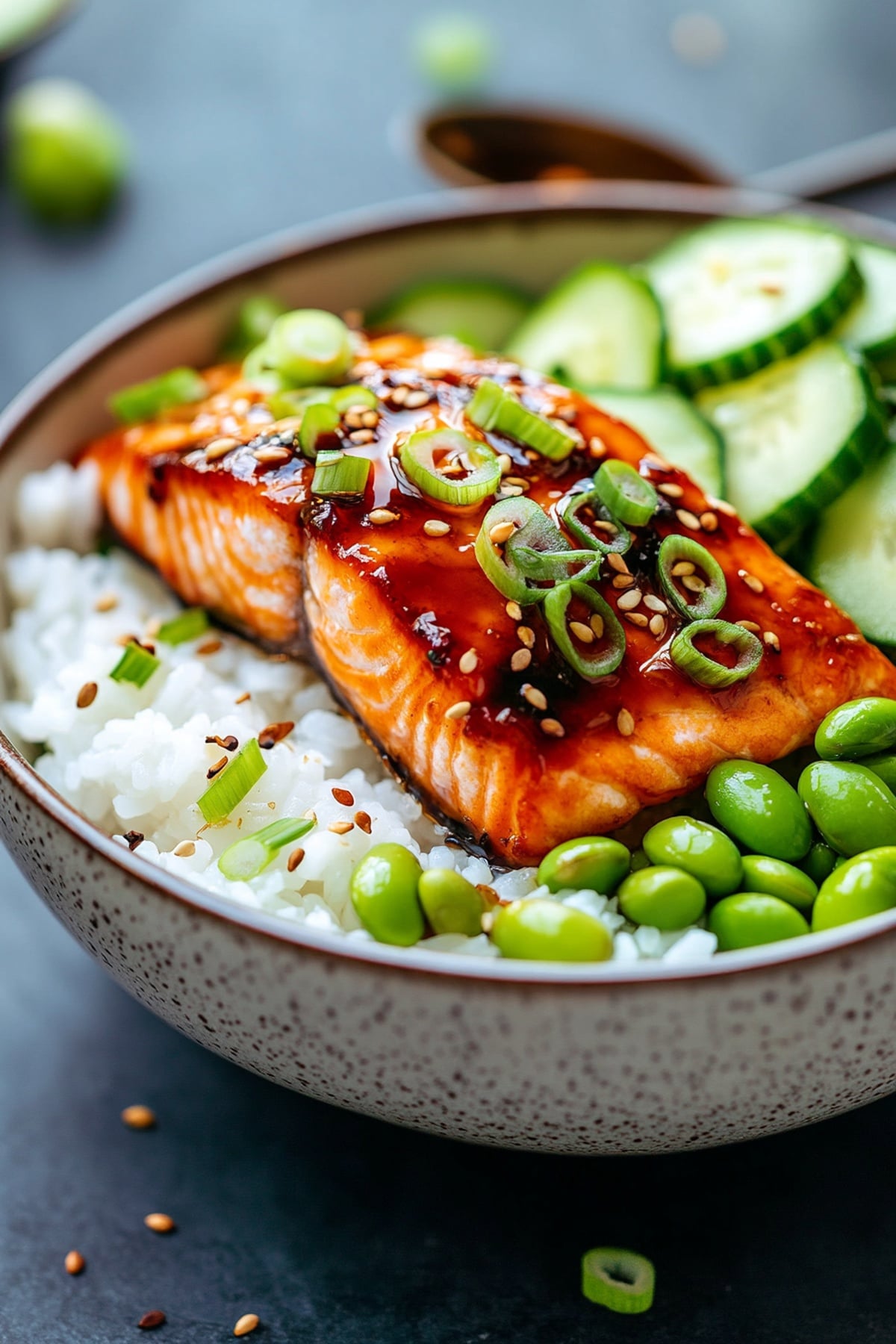
Sticky Miso Salmon Bowl
Ingredients
- 2 cups sushi rice
- 3 tablespoons white miso
- 2 tablespoons honey
- 1 tablespoon vegetable oil
- 1 tablespoon freshly grated ginger
- 2 teaspoons fresh grapefruit zest from 1 grapefruit
- 1 tablespoon grapefruit juice from 1 grapefruit
- 4 skinless salmon fillets, patted dry 6 to 8 ounces each
- Kosher salt and ground black pepper
- 4 green onions, thinly sliced
- 1 tablespoon unsalted butter, cubed
- Any combination of kimchi, chile crisp, toasted nori sheets, sliced cucumber, avocado, radish, or sesame seeds for serving

Instructions
- In a medium bowl, add the rice and fill with cool tap water. Gently run your fingers through the rice, gently, to loosen the starch. Dump out as much water as you can and repeat until the water runs more clear, about two to three more rinses.
- Drain the rice and transfer to a medium saucepan with a tight-fitting lid. Pour in 2 1/4 cups cool water and bring to a boil over medium-high. Stir the rice, then cover and decrease heat to low. Cook without lifting the lid for 18 minutes.
- Meanwhile, place a rack about 5 inches from the broiler. Set the broiler to high.
- In a large bowl, whisk the miso, honey, oil, ginger and grapefruit zest and juice in a large bowl. Season the salmon lightly with salt and add to the bowl. Gently toss to coat. Marinate at room temperature until the rice is done.
- Remove the pot of rice from the heat and let steam, covered, for 10 minutes.
- Using tongs, arrange the salmon on a foil-lined rimmed sheet tray. Do not drain the marinade from the salmon. Spread any excess marinade on top of the fillets. Broil the salmon until glossy and charred in most spots, about 5 minutes for medium-rare or 7 minutes for medium.
- Uncover the rice and add the green onions and butter. Season with salt and pepper. Fluff the rice with a rubber spatula until each grain is coated with butter. Serve the salmon over the rice and add any of the toppings you desire.
- Divide the rice between bowls and serve the salmon filets over the top. Serve with additional toppings, as desired.