Easy Salmon Recipes for Every Night of the Week
Salmon is the fish I cook most often at home. It cooks quickly, takes simple seasoning well, and does not need much handling once it hits the heat.
I pulled these five salmon recipes together because they cover the ways I use salmon most: a quiet dinner for two, an easy baked fillet, a fast broiled version, air fryer bites, and a rice bowl with a miso glaze. The methods are different enough to be useful, but none of them make salmon harder than it needs to be.
Why I Cook Salmon This Often
I cook salmon often because it is practical. It gives you protein, healthy fat, and several cooking options without a long prep list.
A six-ounce serving has about 34 grams of protein, and salmon is one of the better food sources of omega-3 fatty acids. Those are the fats your body does not make on its own.
When I buy salmon, I look for good quality from a source I trust. I do not treat wild-caught and farm-raised as a simple better-or-worse choice. The better answer depends on the fishery, the farm, and how the salmon was handled. I use the Monterey Bay Aquarium Seafood Watch when I want to check current recommendations.
Fresh and frozen salmon both have a place. Good frozen salmon is often better than fresh salmon that has been sitting too long in the case. I thaw it overnight in the refrigerator, then pat it dry before cooking. That small step helps the surface cook better.
The Salmon Recipes
1. Instant Pot Salmon for Two
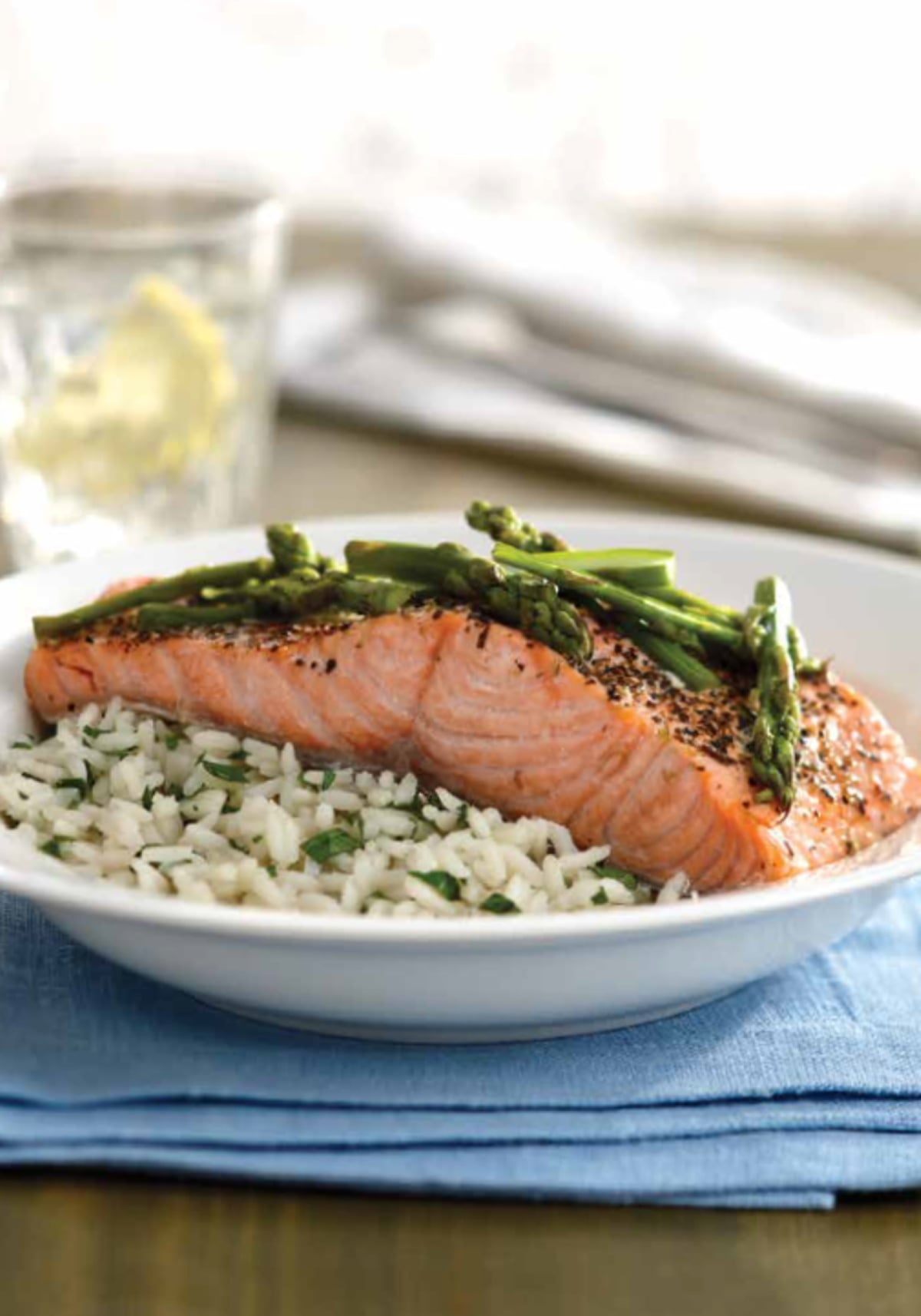
This is the one I make when I want salmon and a vegetable cooked in the same pot. The salmon and asparagus cook together on the steam rack, then the lemon butter sauce comes together right in the pot.
The ingredient list is short: salmon, Herbes de Provence, butter, lemon, and asparagus.
The salmon turns out moist and flaky, and the asparagus keeps enough bite. It is ready in under 15 minutes and serves two, which is helpful when you do not want leftovers or a sink full of dishes.
2. Oven Baked Salmon
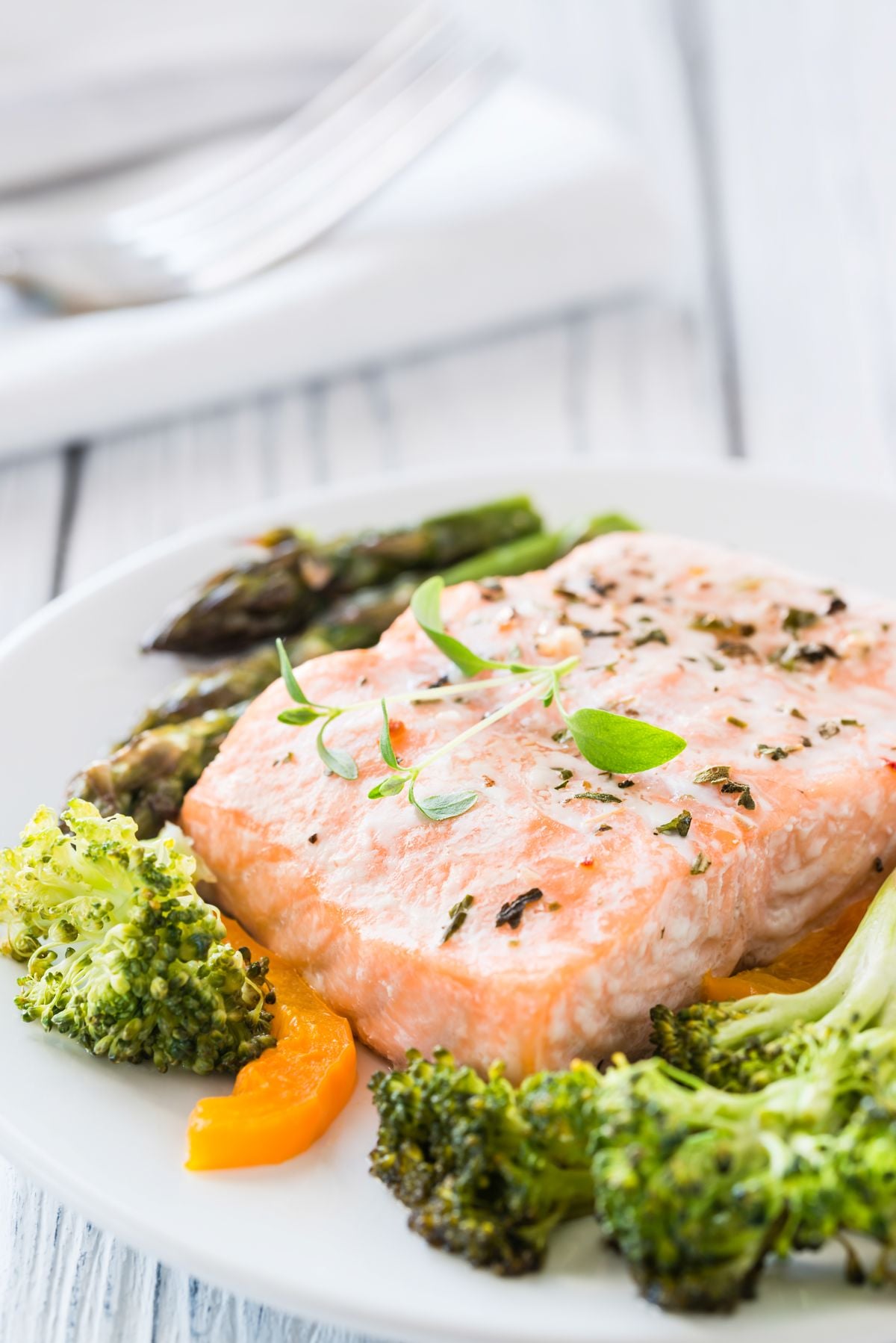
This is the recipe I would give to someone who feels unsure about cooking fish.
There is no hot spattering oil, no sticking, and no pan to watch. The salmon goes into a baking dish with olive oil or butter, kosher salt, and Herbes de Provence, then into a 350°F oven for about 20 minutes.
One small step helps. I warm the oiled baking dish in the oven while it preheats, then add the salmon to the hot dish. That helps the bottom of the fillet cook more evenly.
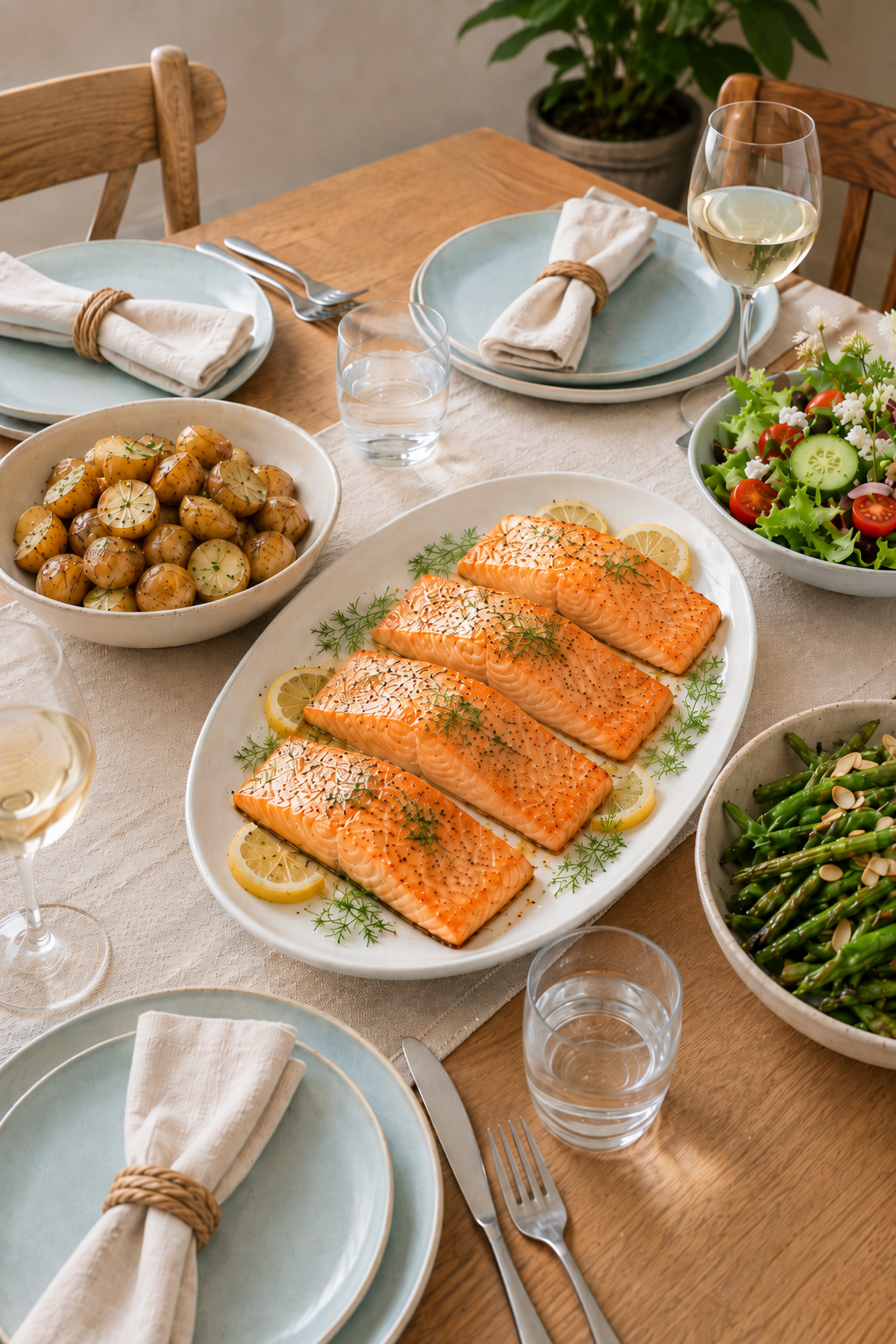
Serve it with sautéed broccoli, green beans, asparagus, or a simple salad. If you have been hesitant about cooking salmon, this is the easiest place to start.
3. Broiled Salmon (With Grilling Option)
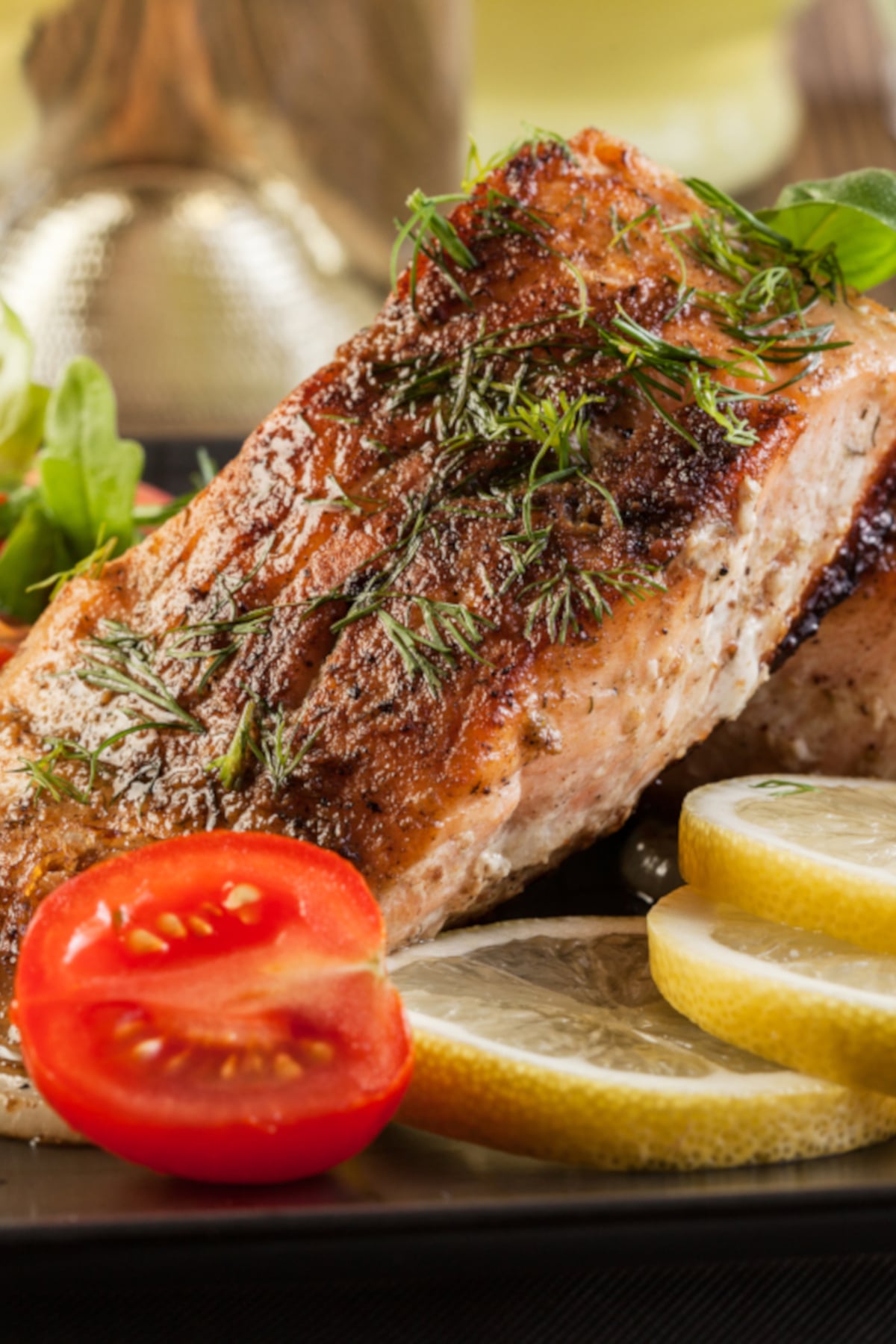
I use the broiler when I want more browning without pulling out a skillet.
The heat comes from above, so the top of the salmon browns quickly while the inside stays moist. This version uses butter, olive oil, basil, lime zest, and red chili flakes. It has enough lime and chili to keep the flavor lively, but it still tastes like salmon.
Set the oven rack about 6 inches from the broiler, brush the salmon with the butter mixture, season it with salt and pepper, and broil it for about 5 minutes. The whole recipe takes about 15 minutes.
This salmon recipe also converts easily to the grill.
4. Air Fryer Honey Soy Salmon Bites
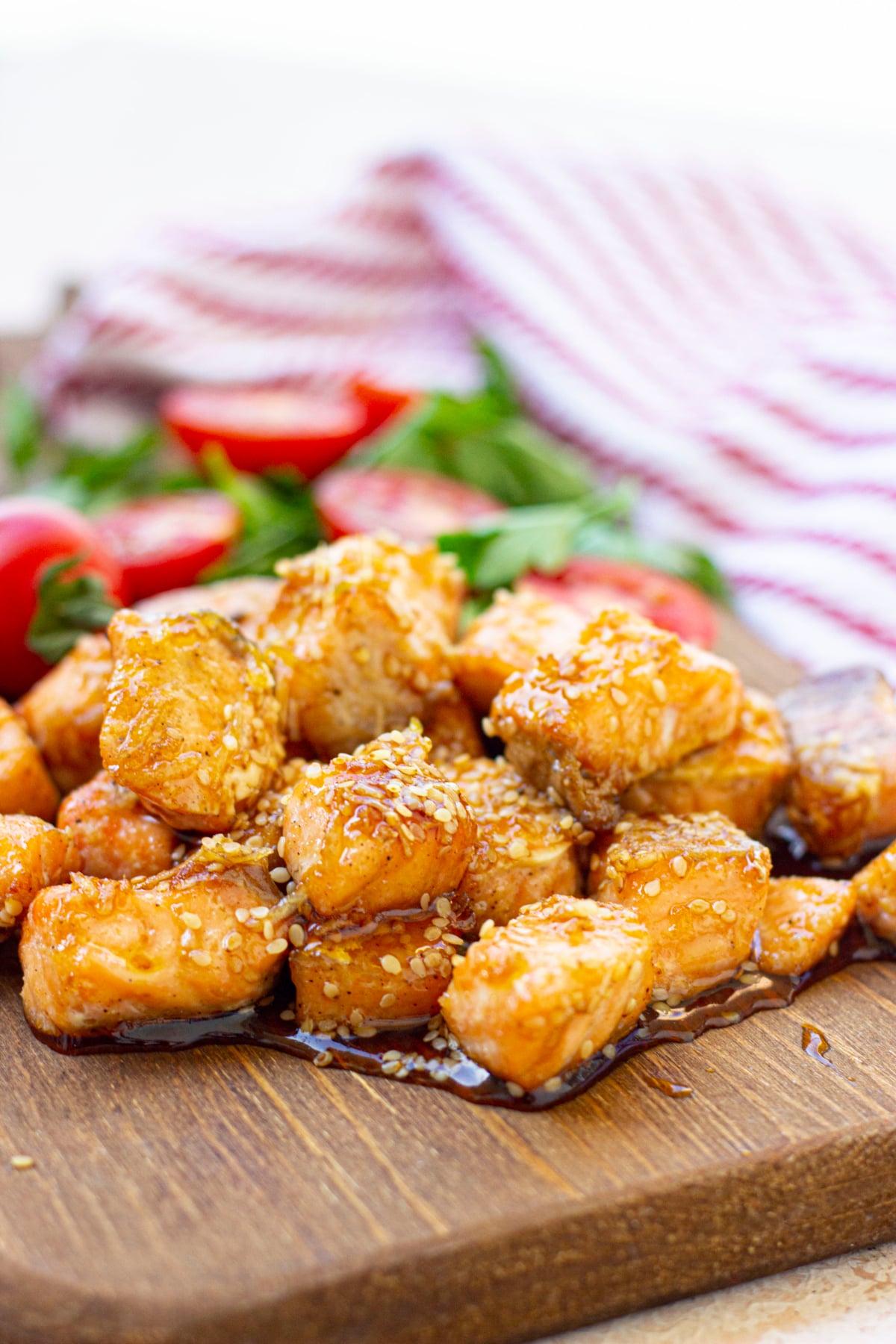
These salmon bites are the most flexible recipe in the group. Cutting the fish into cubes gives you more browned edges and makes the salmon easy to add to bowls, tacos, lettuce cups, or noodles.
The salmon goes into a short marinade with honey, soy sauce, garlic, and ginger, then into the air fryer until the glaze sets and the edges brown. The flavor is sweet, salty, garlicky, and a little spicy.
Cut the salmon into even pieces so they cook at the same rate. Keep the marinade time to about 15 to 20 minutes. If it sits too long, the texture starts to get mushy.
Cook at 380°F for about 5 minutes, and check early. Air fryers do not all heat the same way.
5. Sticky Miso Salmon Bowl
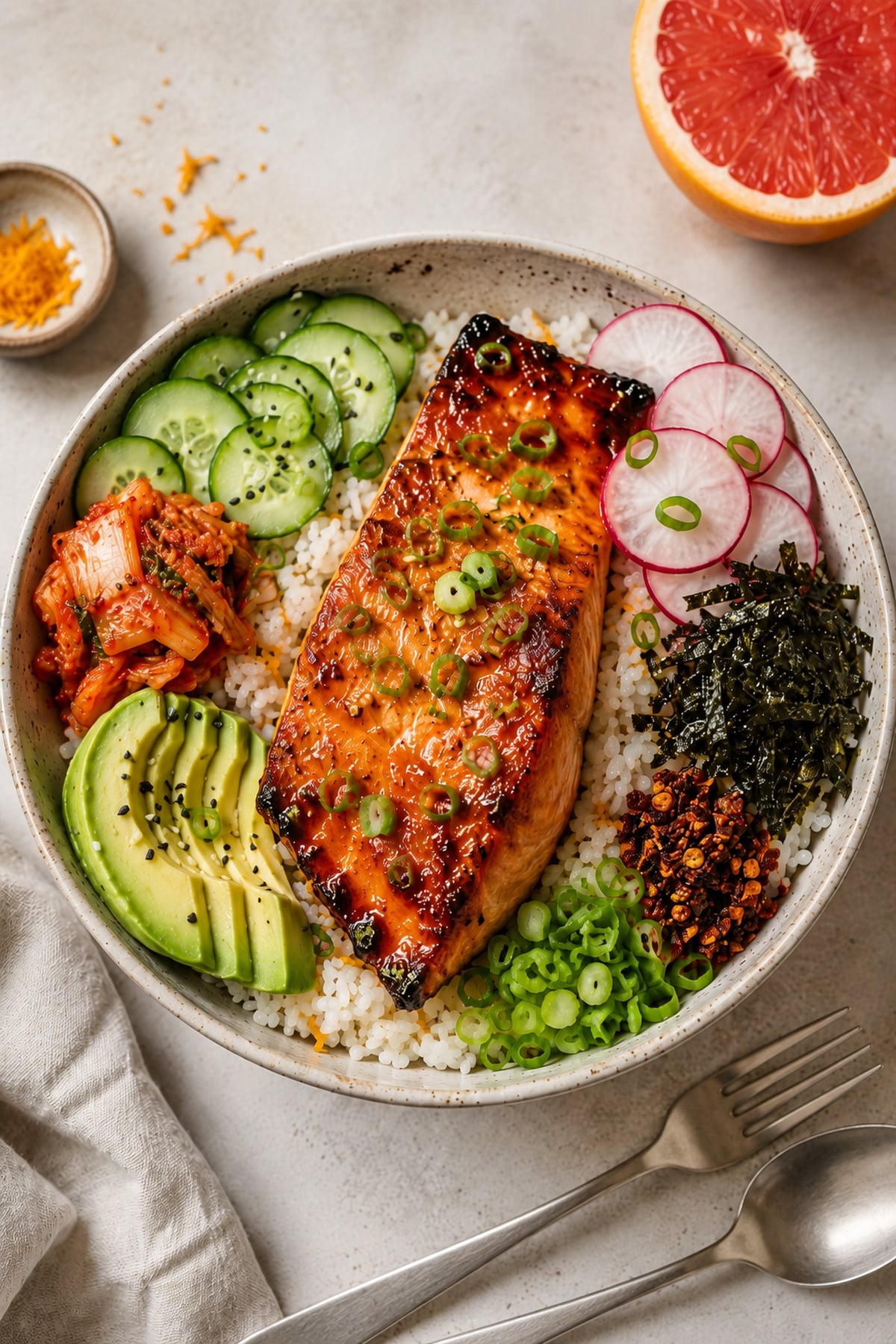
This is the salmon recipe I make when I want rice, toppings, and sauce all in one bowl.
The marinade uses white miso, honey, fresh ginger, grapefruit zest, and grapefruit juice. It comes together while the sushi rice cooks, so you do not need to plan the night before. Under the broiler, the honey caramelizes and the miso darkens into a glossy glaze with browned edges.
The rice gets butter and green onions mixed in. The salmon goes on top. Then I add kimchi for heat, cucumber for crunch, and chile crisp if I want more flavor. Avocado and toasted nori are good additions when I have them.
A few details matter. Pat the salmon dry before it goes into the marinade because surface moisture slows browning. Do not drain off every bit of marinade before broiling. Spread what is left over the fillets. Watch the broiler closely because the window between medium-rare and medium is short.
Tips I Use for Every Salmon Recipe
- Pat It Dry First. Before seasoning salmon, press the fillets with paper towels. Dry salmon browns better. Wet salmon steams. This takes a few seconds and works better for every cooking method.
- Check for Pin Bones. Run your fingers over the fillet before cooking. If you feel any small bones, pull them out with tweezers or needle-nose pliers. I would rather find them at the counter than at the table.
- Use a Thermometer. The USDA recommends 145°F for salmon. Many cooks, including me, pull salmon earlier, usually at 130° to 135°F, and let carryover heat finish the job. Salmon keeps cooking after it comes off the heat, and that helps it stay moist.
- Watch for Overcooking. Overcooking is the most common problem with cooking salmon. The salmon should be slightly opaque, pink and flake easily with a fork. If you see a lot of white protein rising to the surface, the fish is getting too hot. It is still edible, but it will be drier.
- Keep the Skin On While Cooking. You do not have to eat the skin, but it helps hold the fillet together. This matters most with the baked and broiled recipes. After cooking, the skin lifts away easily.
Salmon Questions I Get Asked Often
How Do I Know When Salmon Is Done?
Can I Use Frozen Salmon?
How Do I Store and Reheat Leftovers?
To reheat, use a low oven, about 250°F, until warmed through. The microwave dries salmon out quickly, so I never use it
Which Method Is Fastest?
What Goes Well With Salmon as a Side?
Where to Start
If you are new to cooking salmon at home, start with the oven baked salmon. It is the most forgiving and helps you learn what properly cooked salmon looks and feels like.
After that, use the broiled salmon when you want color fast. Use the Instant Pot version when you want salmon and a vegetable cooked together. Make the salmon bites when you want something for rice bowls, tacos, or lunches. Choose the miso salmon bowl when you want salmon, rice, and toppings in one dish.
Pick the recipe that fits your night and your craving. Once you cook salmon a few times, it gets much easier to know which method to use.