Beef Cuts Chart With Cooking Methods
Understanding cuts of beef and their cooking methods can help you know what to cook with each beef cut. Whether you want the tenderloin for a melt-in-your-mouth steak or the chuck for a flavorful pot roast, each primal cut offers distinct characteristics and recommended cooking techniques for foolproof meat.
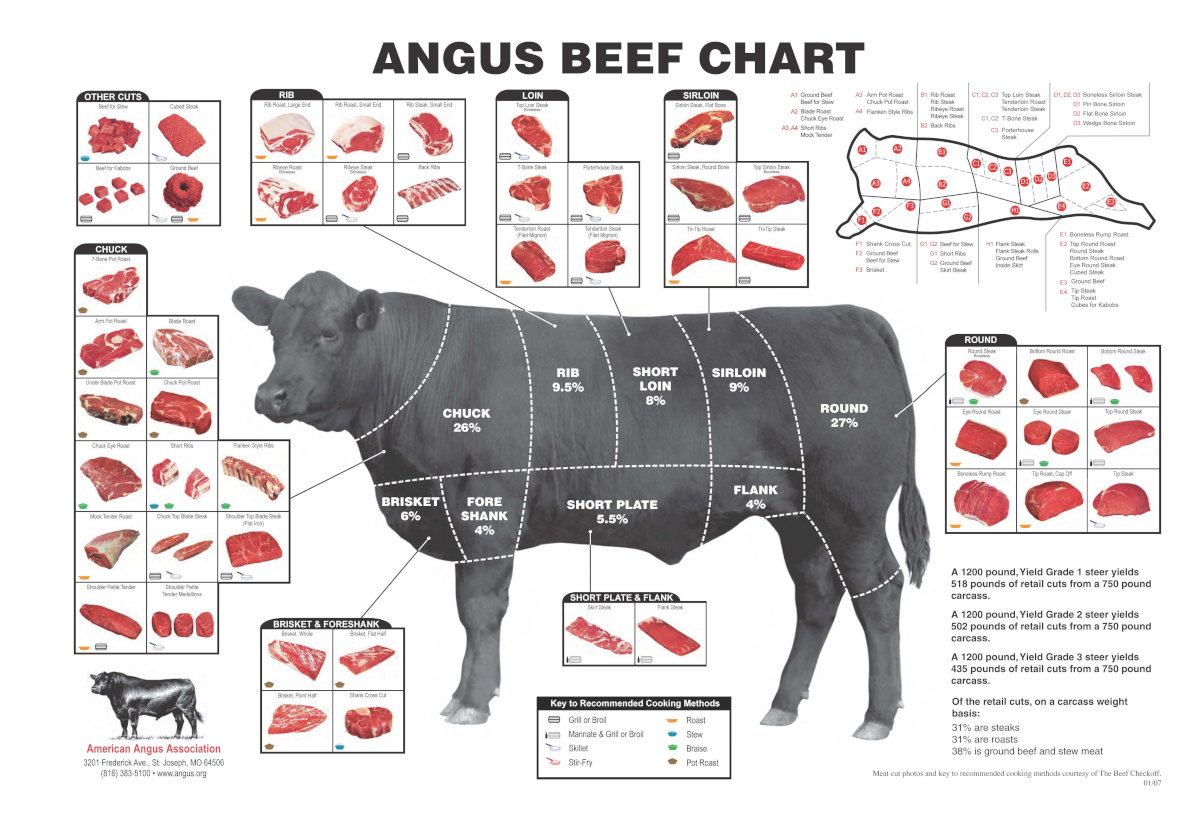
Beef cut diagram provided courtesy of Certified Angus Beef Brand.
Table of contents
Featured Beef Cuts and Cooking Methods
Following is a summary of the main primal cuts of beef, their key characteristics, such as texture and flavor, and the best cooking methods for each. The following beef cut diagram can help you as we guide you along throught the primal cuts. A printable beef cuts chart is included at the end.
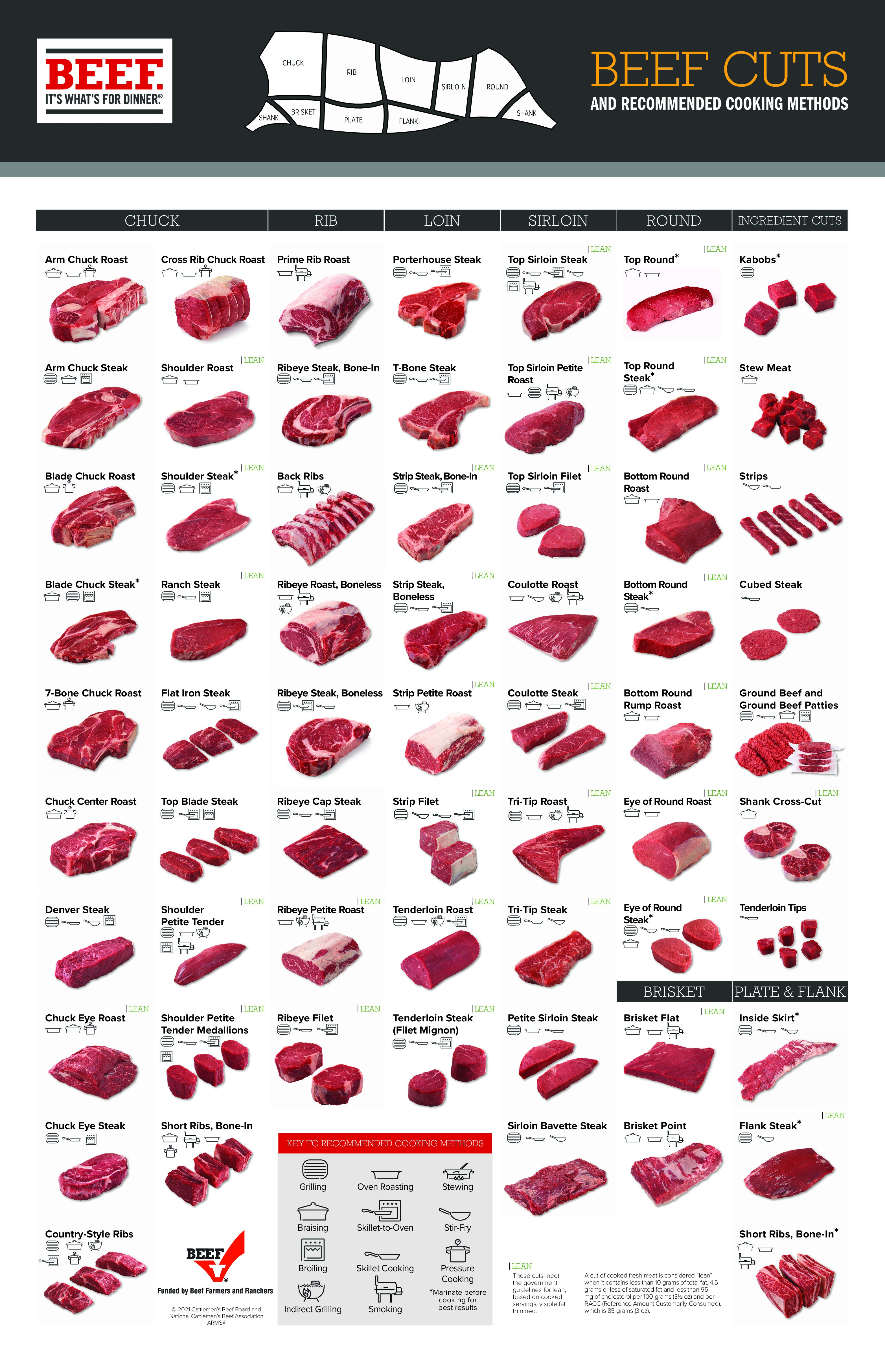
The Beef Cuts Chart is provided courtesy of Beef Its Whats for Dinner.
Download your beef cuts chart with cooking methods
For those looking to explore additional cooking options, we also provide a printable cooking chart for pork cuts that outlines the different cuts available and their ideal preparation methods. This resource will help you understand which pork cut to choose for various recipes, ensuring you achieve the best flavors and textures. By utilizing these charts together, you can elevate your culinary skills across multiple types of meat.
Chuck
- Attributes
- Location: Front of the cow, includes the shoulder.
- Texture: Moderately tender with more fat and connective tissue.
- Flavor: Rich and beefy.
- Recommended Cooking Methods
- Slow Roasting: Ideal for pot roasts, stews, and braises. Beef Chuck Cross Rib Roast is a tender, melt-in-your-mouth example of this cut. A Sunday dinner baked chuck roast is classic comfort food.
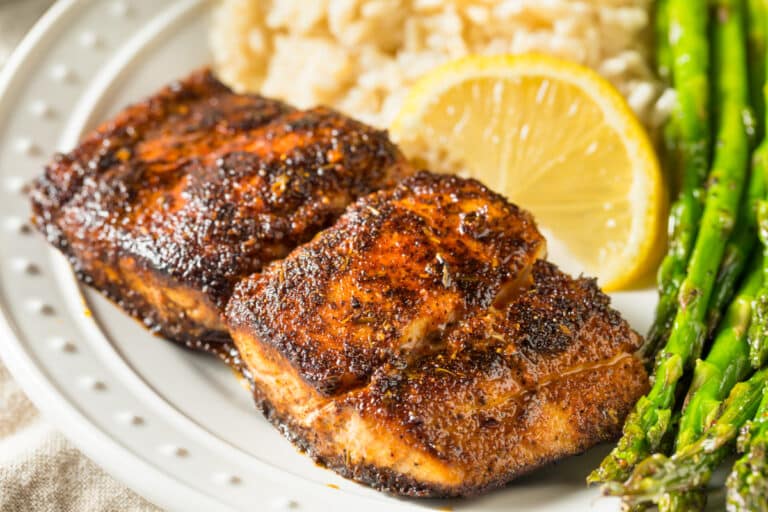
- Pan Searing: Perfect for taking a less expensive cut and turning it into a restaurant-quality steak with our Beef Chuck Steak Recipe.
- Grilling: Suitable for steaks cut from the chuck eye.
- Smoking: Great for Smoked Chuck Roast as the rich taste and beefy flavor complete the smoke flavorings.
- Instant Pot: Chuck roast is transformed into the perfect Sunday dinner with this Instant Pot Pot Roast recipe.
- Air Frying: Many types of chuck cook efficiently in the air fryer, it is always a great place for ground beef, as in these easy Air Fryer Burgers.
Ribs
- Attributes
- Location: Upper back, behind the shoulder.
- Texture: Tender with marbling of fat.
- Flavor: Rich, buttery, and robust.
- Recommended Cooking Methods
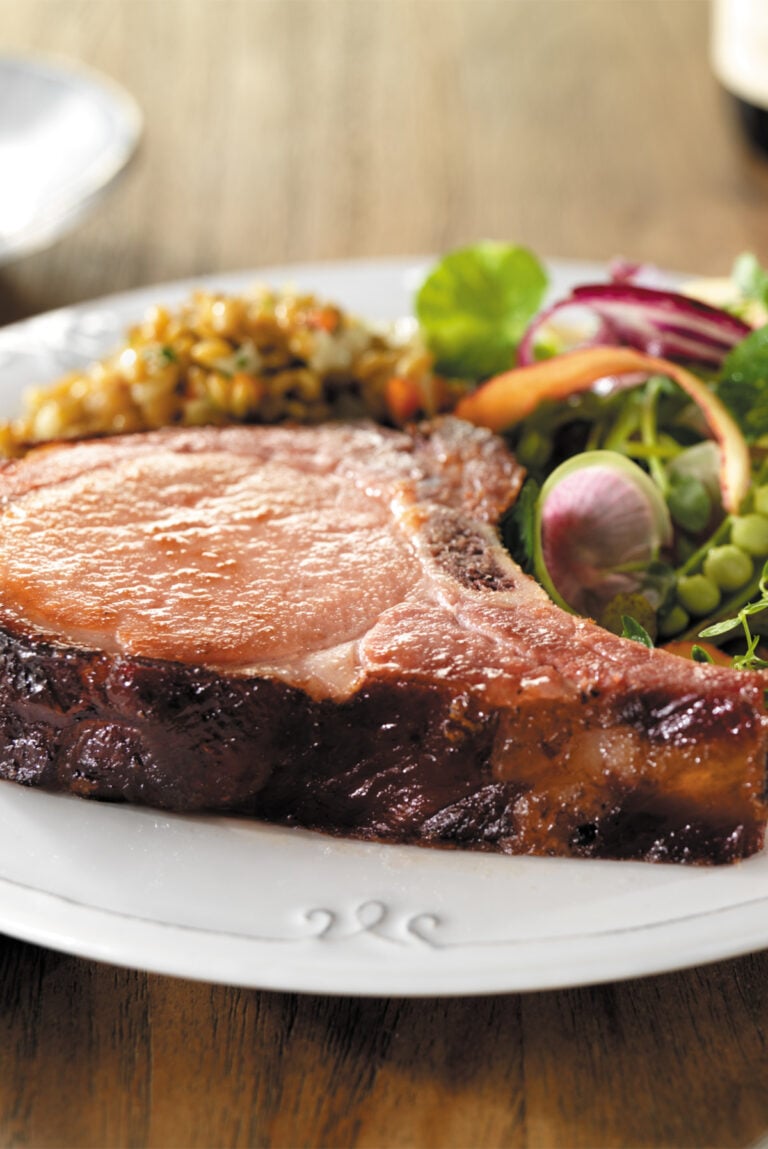
- Roasting: Perfect for prime rib and ribeye roasts. Slow baked beef back ribs are everything you could want in the perfect comfort food.
- Grilling: Excellent for ribeye steaks and beef back ribs.
Loin
- Attributes
- Location: Lower back, behind the ribs.
- Texture: Very tender with less fat.
- Flavor: Mild and delicate.
- Recommended Cooking Methods
- Grilling and Searing: Ideal for T-bone and porterhouse steaks.
- Roasting: Best for tenderloin roasts.
Sirloin
- Attributes
- Location: Between the loin and the round, near the cow’s rear.
- Texture: Leaner than rib and loin cuts, but still tender.
- Flavor: Full-bodied and beefy, more intense than loin cuts.
- Recommended Cooking Methods
- Grilling and Smoking: Perfect for top sirloin steaks and Smoked Tri-Tip roast that are best cooked to medium-rare or medium.
- Pan Searing: Ideal for creating a flavorful crust while keeping the inside juicy. If you want to indulge you craving for a juicy, seared steak, these Picanha Steaks recipe are the perfect choice. For a different take on sirloin, try this Sirloin Steak Tips recipe that is ready in under 20 minutes, yet tastes like a gourmet meal.
- Roasting: Suitable for larger sirloin roasts like this Sirloin Tip Roast ensuring even cooking.
- Braising: Ideal for slow cooking a Tri Tip is a spicy, Adobo sauce for Mexican Beef Birria Tacos or a Beef Birria stew.
Round
- Attributes
- Location: Rear end of the cow.
- Texture: Lean and less tender.
- Flavor: Mild and slightly sweet.
- Recommended Cooking Methods
- Roasting: Suitable for Top Round Roasts and Rump Roast.
- Braising: Perfect for making pot roasts and stews.
Flank
- Characteristics
- Location: Lower belly of the cow.
- Texture: Lean and fibrous.
- Flavor: Bold and beefy.
- Recommended Cooking Methods
- Marinating and Grilling: Marinating is essential to tenderize the meat Best served medium-rare.
- Marinating and Pan Searing: Works quickly and easily, such as in this Pepper Steak and Onions recipe.
- Marinating and Broiling: A great option that is flavors the ribs and gets done fast. Try our Flanken Short Ribs recipe, which marinates the short cuts in a spicy-sweet Korean BBQ sauce.
Plate
- Characteristics
- Location: Underbelly, below the ribs.
- Texture: Fatty and tough.
- Flavor: Strong and rich.
- Recommended Cooking Methods
- Braising: Ideal for short ribs and skirt steaks.
- Slow Cooking: Perfect for making flavorful braises.
- Grilling and Smoking: The strong flavor is perfect for Grilled Skirt Steak or Smoked Beef Ribs.
Brisket
- Characteristics
- Location: Lower chest or breast.
- Texture: Tough with connective tissue.
- Flavor: Deep and meaty.
- Recommended Cooking Methods
- Smoking: Classic for barbecue brisket and burnt ends. This brisket time guide is the best source for the wide range of brisket sizes. For a manageable-sized cut that is great in sandwiches, try this Brisket Flat Recipe.
- Braising: For a classic holiday roast, this Oven Baked Beef Brisket is a popular recipe that is perfect for serving a crowd. It is also suitable for corned beef and stews.
- Roasting: Roasting with a simple dry rub is a great way to cook brisket. The key to roasting is patience. The brisket needs to be wrapped and refrigerated after adding the rub for at least 4 hours, and the roasting will take a minimum of 5 hours. Resting after cooking takes another hour. Read through your recipe to plan ahead of time for roasting brisket. The rewards are worth it!
Shank
- Characteristics
- Location: Leg portion.
- Texture: Very tough with connective tissue.
- Flavor: Robust and meaty.
- Recommended Cooking Methods
- Braising: Perfect for osso buco and beef bourguignon.
- Slow Cooking: Ideal for soups and stews.